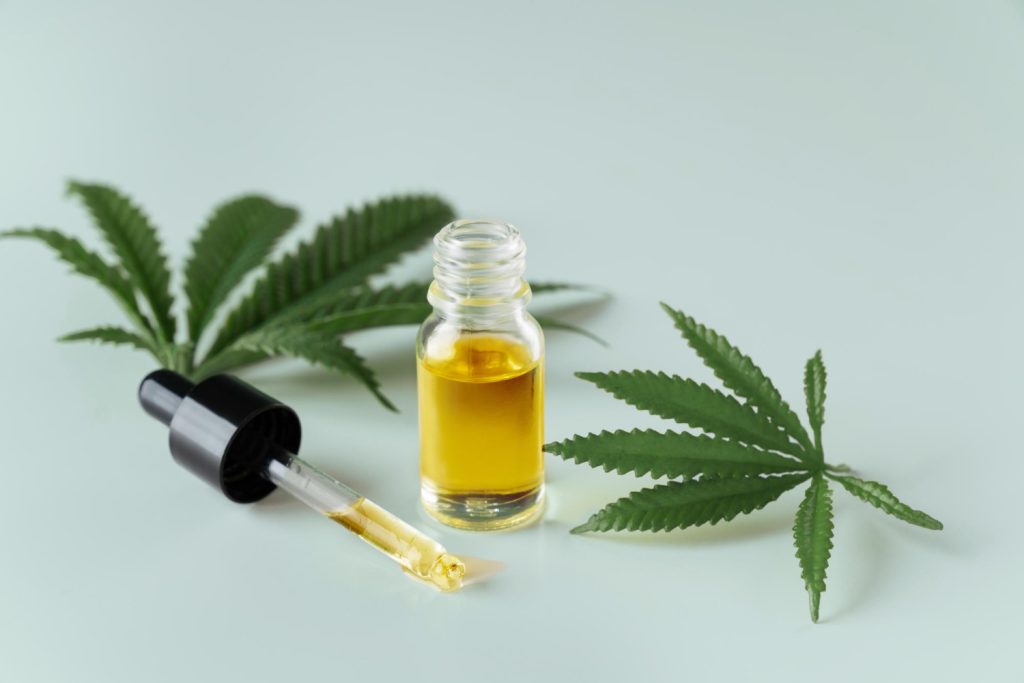
What does CBD oil taste like
Cannabidiol (CBD) oil has a distinctive taste that surprises many first-time users. The flavour comes primarily from the hemp extract — and the intensity varies significantly depending on the product’s spectrum type, carrier oil and concentration. Understanding what to expect makes the experience less unexpected and helps with choosing the right format and administration method.
This article covers what CBD oil tastes like, what determines that flavour, how the experience differs between product types, and practical approaches for people who find the taste difficult.
The base taste of hemp extract
Hemp extract — the concentrated cannabinoid-rich oil derived from hemp flowers and leaves — has an earthy, green, slightly bitter taste with herbal undertones. Some people describe it as similar to freshly cut grass, mild green tea or a concentrated herbal tincture. The bitterness is mild to moderate, not sharp like black coffee or tonic water. The earthy quality comes from the combination of chlorophyll, terpenes and cannabinoids in the extract.
The taste is not unpleasant to most people who use CBD oil regularly — it becomes familiar quickly and many users report not noticing it at all after the first week or two. For a smaller group, the earthy bitterness is a persistent issue that affects compliance with a daily routine. The format and method options below address that situation.
What determines the intensity of CBD oil’s taste
Four factors determine how strongly the hemp flavour comes through in a given product.
Spectrum type. Full spectrum CBD oil retains the broadest range of hemp plant compounds — cannabinoids, terpenes, chlorophyll and other plant material. These compounds collectively produce the strongest hemp flavour. Broad spectrum is similar to full spectrum in taste because it retains terpenes alongside cannabinoids, with THC removed. CBD isolate, where all plant compounds except pure crystalline cannabidiol are removed, has a near-neutral taste — minimal flavour, sometimes described as faintly waxy. The full spectrum vs broad spectrum comparison explains the formulation differences beyond taste.
Carrier oil. The carrier oil significantly influences overall taste because it makes up the bulk of the product volume. MCT (medium-chain triglyceride) coconut oil — used in all EU Labs products — is nearly flavourless with a very mild, neutral character that doesn’t compete with or amplify the hemp taste. Hemp seed oil as a carrier adds its own nutty, slightly grassy flavour on top of the extract’s hemp taste, which some people find pleasant and others find amplified in an unwelcome direction. Olive oil as a carrier adds distinctive bitterness. MCT is generally considered the least intrusive carrier for taste purposes. The MCT carrier article covers why MCT is the standard choice.
Concentration. Higher concentration means more hemp extract per millilitre. The EU Labs CBD Oil 12000mg at 240 mg/mL delivers a stronger hemp flavour per drop than the 3000mg at 60 mg/mL. But because higher concentration means fewer drops per serving, the total flavour intensity of a serving may not be proportionally stronger — a quarter-dropper of 12000mg oil delivers roughly the same CBD as a full dropper of 3000mg oil, and a similar total extract volume.
Extraction quality. CO₂ extraction produces a cleaner-tasting extract than solvent-based methods because no residual solvent remains in the finished product. Poorly purged solvent extraction can leave chemical aftertastes. EU Labs uses supercritical CO₂ extraction across the entire range. The CO₂ vs solvent extraction article covers what this means for extract purity.
The sublingual experience
When CBD oil is held under the tongue for 30 to 60 seconds — the standard sublingual method — the taste is most pronounced. The mucous membrane beneath the tongue and the floor of the mouth are directly exposed to the oil, and the flavour is noticed from the first moment of contact. This is the trade-off for faster onset: the sublingual method delivers CBD more quickly than swallowing but means direct taste exposure.
After holding and swallowing, a mild herbal aftertaste typically lingers for a few minutes. Most people find it dissipates quickly. Drinking water after swallowing clears the aftertaste faster. The dropper guide covers sublingual technique in detail — holding for a full 60 seconds rather than swallowing immediately maximises absorption through the sublingual membrane.
Options for people who find the taste difficult
Several practical approaches work for people who want to maintain a CBD oil routine but find the taste a consistent barrier.
Mix into food or drink. CBD oil can be stirred into a smoothie, mixed into yoghurt, blended into a salad dressing or added to any food with enough fat content to carry the oil. A fatty food base (avocado, nut butter, full-fat dairy) also assists absorption, since cannabinoids are fat-soluble. This bypasses the sublingual taste experience entirely — the oil is swallowed as part of food rather than held under the tongue. Onset is slower (30 min – 2 hrs for oral ingestion vs 15–20 min sublingually) but the taste issue is largely eliminated.
Chase with a strong-flavoured drink. Taking CBD oil sublingually and then immediately drinking something with a strong flavour — citrus juice, a flavoured sparkling water — can overwrite the hemp aftertaste quickly. Some people use coffee or tea to the same effect. This doesn’t eliminate the taste during the hold but minimises the post-swallow aftertaste.
Take it with honey or another sweet food. A small amount of honey either applied to the dropper drop before placing it under the tongue, or taken immediately after, partially masks the bitterness. The sweetness doesn’t neutralise the hemp flavour but provides a competing sensation that many people find sufficient.
Swallow directly without holding. Swallowing CBD oil immediately, without the sublingual hold, reduces flavour exposure because the oil passes quickly through the mouth. The trade-off is lower sublingual absorption — the faster, higher-bioavailability pathway is missed. For people for whom taste is the primary concern and onset time is not critical, this is a straightforward approach.
Use capsules instead. Capsules bypass the palate entirely — there is no taste. The cannabidiol is delivered via the oral digestive pathway (30 min – 2 hrs onset), but the flavour experience is eliminated. EU Labs does not produce capsules; this option requires a different brand. The capsules vs oil comparison covers the full format trade-off.
Does the taste indicate quality
Taste alone is not a reliable quality indicator. A strong hemp flavour does not mean a product has more CBD; a mild or neutral taste does not mean it has less. Concentration, carrier oil choice and extraction method all affect taste independently of cannabinoid content. The only way to verify what’s in a CBD oil is a batch-specific certificate of analysis (COA) from an independent third-party lab — not the taste. The quality criteria guide covers the five factors that actually determine CBD oil quality.
EU Labs CBD oils use MCT coconut oil as the carrier and CO₂ extraction, which produces a cleaner flavour profile than many alternatives. The full range — CBD Oil 3000mg Full Spectrum, 3000mg Broad Spectrum, 12000mg Full Spectrum and 12000mg Broad Spectrum — is available through the Stillroot shop, shipping to Sydney, Melbourne, Brisbane, Perth, Newcastle, Bunbury and all other Australian locations.
Frequently asked questions
Does CBD oil taste like cannabis?
Full spectrum CBD oil has an earthy, herbal taste from the hemp terpenes and plant compounds retained in the extract — similar to the characteristic scent of cannabis but milder and without the smoke. It does not taste like the recreational cannabis smoking experience. Most people describe it as an herbal or green tea-like bitterness that fades quickly after swallowing.
Is there CBD oil without taste?
CBD isolate-based products come closest to tasteless CBD — pure crystalline cannabidiol in MCT oil has minimal flavour. Full spectrum and broad spectrum products retain terpenes, which contribute taste. No full spectrum or broad spectrum CBD oil is completely flavourless, though MCT-carried products are milder than those using hemp seed or olive oil as the carrier.
Does higher strength CBD oil taste stronger?
Higher concentration means more extract per millilitre, which does produce a more intense flavour per drop. However, higher-concentration products require fewer drops per serving to deliver the same CBD amount. The per-serving flavour experience depends on both concentration and the size of the serving — a quarter-dropper of 12000mg may taste similar in total intensity to a full dropper of 3000mg, since both deliver roughly the same extract volume at the same CBD amount.
Can I add flavouring to CBD oil?
Some people add a drop of food-grade flavouring to their CBD oil serving. This can work, but flavouring should be diluted in a fat-soluble medium (oil-based flavourings) rather than water-based, since cannabidiol is fat-soluble and doesn’t mix uniformly with water. Commercially flavoured CBD oils achieve this during manufacturing. Adding flavouring post-purchase is an approximation.
Why does my CBD oil taste different to a previous batch?
Hemp terpene profiles vary between cultivars and harvests. Two batches from the same brand using hemp from different crops may have slightly different aromas and flavour notes even at the same cannabinoid concentration. This batch-to-batch variation is normal with agricultural-source products. The cannabinoid potency should remain consistent within the label’s stated tolerance — confirmed by the batch-specific COA.
These products have not been evaluated by the TGA. They are not intended to diagnose, treat, cure, or prevent any disease. You must be 18+ to purchase. Please consult a healthcare professional before use.