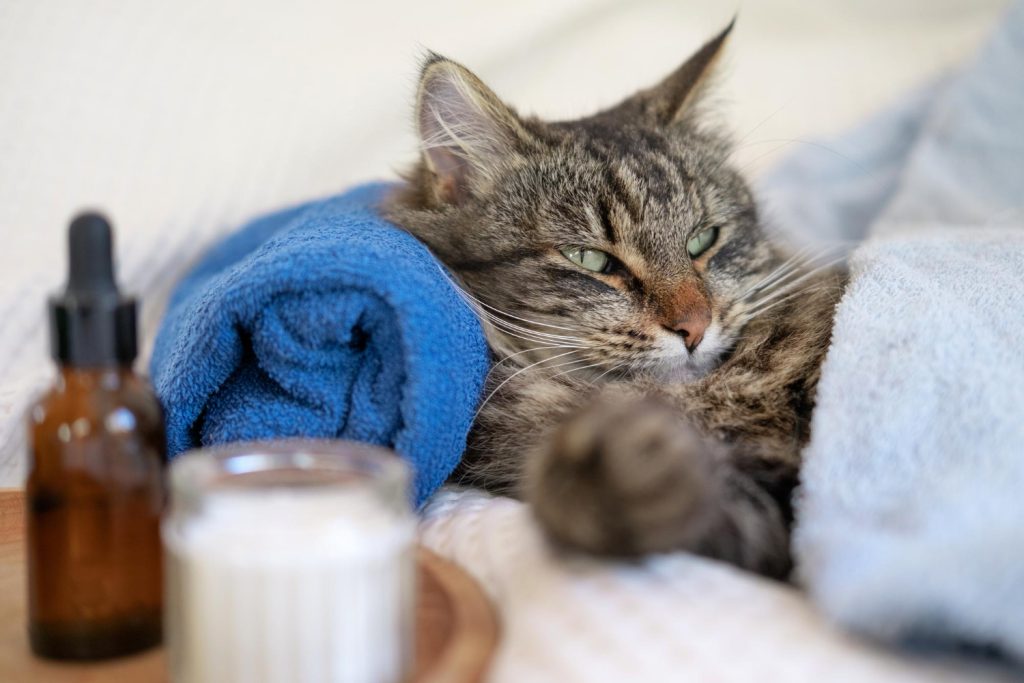
CBD oil vs hemp seed oil for pets — what’s the difference
Hemp seed oil and cannabidiol (CBD) oil appear on pet product labels with similar branding — the word “hemp” features prominently in both. They are not the same product. Hemp seed oil is a nutritional oil pressed from hemp seeds and contains no cannabidiol. CBD oil is an extract from the hemp plant’s flowers and leaves, containing cannabidiol and other cannabinoids. Giving a pet hemp seed oil does not provide CBD; purchasing a product labelled with hemp imagery does not confirm it contains any cannabinoids.
This article covers the source, composition and intended use of each product, how to tell them apart on a label, and what Australian pet owners should look for when specifically seeking CBD oil for their animal.
Hemp seed oil — what it is
Hemp seed oil is produced by cold-pressing hemp seeds — the same process used to make other seed oils like flaxseed or sunflower oil. Hemp seeds do not contain cannabidiol, THC or significant concentrations of other cannabinoids. The cannabinoids in the cannabis plant are produced in the flowers and trichomes, not the seeds. Cold-pressing seeds cannot extract cannabinoids that were never present.
Hemp seed oil is rich in omega-3 and omega-6 fatty acids, including alpha-linolenic acid (ALA) and linoleic acid, in a ratio often cited as nutritionally favourable. It also contains gamma-linolenic acid (GLA), vitamin E and small amounts of other nutrients. These nutritional properties are the basis for hemp seed oil’s use as a dietary supplement in both human and pet products.
Hemp seed oil has no psychoactive properties and requires no regulatory scheduling under Australia’s TGA framework — it is treated as a food ingredient. It is widely available in health food stores, supermarkets and pet supply retailers without prescription or pharmacist consultation.
CBD oil for pets — what it is
CBD oil for pets is an extract from the hemp plant’s aerial parts — flowers, leaves and stems — not the seeds. The extract contains cannabidiol along with other cannabinoids (CBG, CBN and others), terpenes and minor plant compounds. This extract is then diluted in a carrier oil — typically MCT (medium-chain triglyceride) coconut oil — to create the finished product.
The EU Labs Pet CBD Oil 2000mg Full Spectrum delivers 40 mg of cannabidiol per millilitre in a 50 mL glass dropper bottle, with MCT coconut oil as the carrier. It contains hemp extract and MCT — not hemp seed oil. The distinction matters because hemp seed oil and MCT coconut oil are different carriers with different nutritional profiles and absorption characteristics. The MCT carrier oil article explains why MCT is used in EU Labs products.
Pet CBD oil is subject to TGA and APVMA regulatory frameworks in Australia because it contains cannabinoids — biologically active compounds that interact with the endocannabinoid system. Hemp seed oil, containing no cannabinoids, is not regulated under these frameworks. The pet CBD oil in Australia article covers the regulatory context for cannabinoid products for animals.
Why the confusion exists
Several factors contribute to confusion between hemp seed oil and CBD oil in the pet product market.
Label design. Some pet products use hemp leaf imagery, green branding and “hemp” prominently in the product name while containing only hemp seed oil. This creates visual association with CBD without delivering cannabinoids. Reading the ingredient list — not the front label — is the only reliable way to determine what’s in the bottle.
Deliberate mislabelling. Investigations by consumer organisations in the US and Australia have identified pet products claiming CBD content that tested as hemp seed oil or contained significantly less CBD than stated. Without a batch-specific certificate of analysis (COA) from an independent third-party lab, there is no way to verify cannabinoid content from the label alone.
Legal access constraints. In markets where CBD is tightly regulated, some brands sell hemp seed oil products with hemp-forward branding as a compliant alternative. Australian pet owners encountering these products online may not realise they’re buying a seed oil rather than a CBD extract.
Price. Hemp seed oil costs a fraction of CBD oil to produce. A “hemp oil for pets” product at a very low price point is likely hemp seed oil rather than a CBD extract — though price alone is not a reliable differentiator.
How to tell them apart on a label
Three label elements determine which product you have:
Ingredient list. CBD oil for pets should list “hemp extract” or “hemp cannabidiol extract” as an ingredient — not “hemp seed oil” or “Cannabis sativa seed oil.” If the ingredient list shows only hemp seed oil and no hemp extract, the product contains no CBD.
Milligram content. CBD oil states the total milligrams of cannabidiol per bottle and the concentration in mg/mL. A product without a milligram figure for CBD is not a CBD product. Hemp seed oil labels state volume (mL) and nutritional information, not cannabinoid content.
Certificate of analysis. A batch-specific COA from an independent lab confirming cannabidiol concentration is the definitive verification. Hemp seed oil products do not have cannabinoid potency panels on their COAs because they contain no cannabinoids to test. Any CBD product for pets should have a COA showing the CBD content per batch. The lab testing article explains what to look for in a COA, and the lab report guide walks through interpreting the results.
Can hemp seed oil serve as a carrier in CBD oil
Yes — hemp seed oil can be used as a carrier oil in CBD oil, just as MCT coconut oil can. In this case, the product contains both hemp extract (the CBD source) and hemp seed oil (the carrier). A CBD oil using hemp seed oil as its carrier will list both “hemp extract” and “hemp seed oil” in the ingredient list. The CBD comes from the extract, not the seed oil.
EU Labs uses MCT coconut oil as its carrier across the full range — human and pet products. MCT is flavourless, stays liquid at room temperature and has a thin viscosity that produces consistent drops. Hemp seed oil has a stronger flavour and a slightly thicker consistency, but is a functional carrier for CBD extract.
Which product is appropriate for pets
Hemp seed oil and CBD oil serve different purposes. Hemp seed oil is a nutritional oil with fatty acid content — it is not a cannabinoid product and does not interact with the endocannabinoid system in the way CBD does. It is appropriate as a dietary fat supplement; it is not a substitute for CBD oil if CBD is what’s being sought.
CBD oil for pets delivers cannabidiol and other cannabinoids that interact with the animal’s endocannabinoid system. The appropriate product choice depends on what the pet owner is trying to provide. Veterinary consultation is the recommended first step for any CBD oil routine with a pet — the vet conversation guide covers how to approach that discussion. The dog CBD dosage guide covers serving size calculation for canine use.
The EU Labs Pet CBD Oil 2000mg is available through the Stillroot shop, shipping to Sydney, Melbourne, Brisbane, Perth, Gold Coast, Hobart, Albury and all other Australian locations.
Frequently asked questions
Does hemp seed oil contain CBD?
No. Hemp seed oil is produced by cold-pressing hemp seeds, which contain no cannabidiol. CBD is produced in the hemp plant’s flowers and trichomes, not its seeds. A product labelled “hemp seed oil” contains fatty acids, omega-3s and vitamin E — not cannabinoids.
Can I give my pet hemp seed oil instead of CBD oil?
Hemp seed oil and CBD oil are different products with different compositions. Hemp seed oil provides fatty acids; CBD oil provides cannabinoids including cannabidiol. If the goal is to provide CBD to a pet, hemp seed oil does not serve that purpose. Consult a veterinarian to determine which product is appropriate for your animal’s situation.
How do I know if a pet product contains real CBD?
Check three things: the ingredient list (should show “hemp extract” not just “hemp seed oil”), the milligram cannabidiol content stated on the label, and a batch-specific COA from an independent third-party lab confirming CBD concentration. Without all three, there is no verified basis for a CBD claim.
Why is “hemp oil” sometimes used to mean CBD oil?
The term “hemp oil” is used inconsistently — sometimes to mean CBD oil, sometimes to mean hemp seed oil, sometimes to mean either. The imprecise terminology is partly historical (CBD products used “hemp oil” to avoid cannabis-associated language during periods of regulatory uncertainty) and partly marketing (hemp has more general-consumer appeal than “cannabis extract”). Always look past the marketing term to the ingredient list and COA.
Is hemp seed oil safe for dogs and cats?
Hemp seed oil is generally considered safe for dogs in small amounts as a fatty acid supplement. It does not contain THC or CBD, so the cannabinoid-related concerns around pet CBD products do not apply. As with any dietary supplement for a pet, consult a veterinarian before adding it to the animal’s routine, particularly if the pet takes medication or has existing health conditions.
These products have not been evaluated by the TGA. They are not intended to diagnose, treat, cure, or prevent any disease. You must be 18+ to purchase. Please consult a healthcare professional before use.