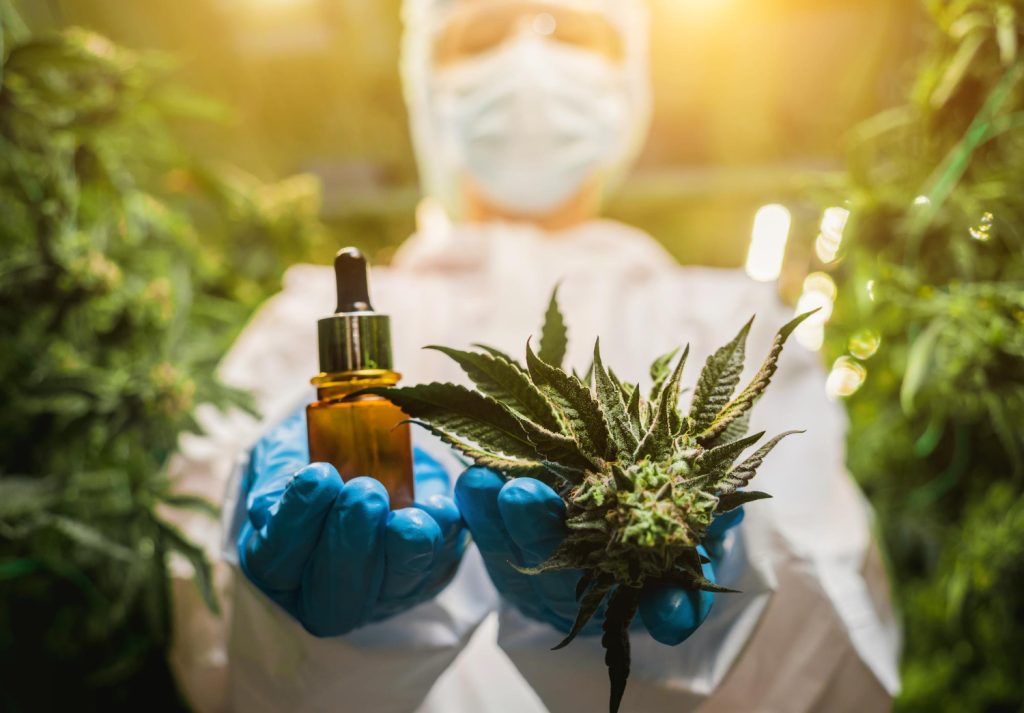
What to look for when buying CBD oil online
Buying cannabidiol (CBD) oil online means choosing from dozens of brands, each claiming quality, purity and accurate labelling. The problem is that most CBD markets — including Australia’s — have limited enforcement at the retail level. A 2024 study in Frontiers in Pharmacology tested 202 commercially available CBD products and found heavy metal contamination in 44 of them, with lead as the most common contaminant. Labels frequently overstated or understated actual CBD content.
The difference between a trustworthy product and a questionable one comes down to what a buyer can verify before purchasing. Not marketing. Not packaging design. Verifiable documentation — starting with the certificate of analysis (COA), a third-party lab report confirming cannabinoid content and contaminant screening for a specific production batch.
This article covers the six things worth checking before placing an order, the red flags that should stop a purchase, and how Australian regulations affect what’s available. For the full purchasing process, the guide to buying CBD oil online in Australia walks through each step.
Check the certificate of analysis first
A certificate of analysis (COA) is the single most important document a CBD brand can provide. Issued by an independent third-party laboratory — not the manufacturer — a COA reports exact cannabinoid concentrations, tetrahydrocannabinol (THC) levels and contaminant screening results for a specific batch. If a brand doesn’t publish COAs, there’s no way to verify what’s inside the bottle.
Three things to confirm on any COA before buying. First, the lab should be independent and ISO/IEC 17025 accredited — the international standard for testing laboratory competence. Second, the COA should be batch-specific, with the batch number matching the product label. A single generic COA covering “all products” tells you nothing about the specific bottle you’re buying. Third, the report should cover all six testing panels: cannabinoid potency, heavy metals, pesticides, residual solvents, microbial contamination and mycotoxins. A potency-only COA confirms CBD content but says nothing about safety.
For a detailed breakdown of each testing panel and what the results mean, the third-party lab testing article covers all six panels in depth. Common COA abbreviations — LOD, LOQ, ND — are explained in a guide to COA testing terms.
Extraction method and what it means for purity
The extraction method determines what ends up in the oil — and what doesn’t. CO₂ extraction uses supercritical carbon dioxide to separate cannabinoids and terpenes from hemp plant material. The carbon dioxide evaporates completely from the finished extract, leaving no solvent residue behind. CO₂ extraction also preserves heat-sensitive terpenes better than most alternatives.
Solvent-based extraction uses chemicals like butane, ethanol or hexane to dissolve cannabinoids from the plant. Cheaper to operate, but it carries a residual solvent risk — trace amounts of the extraction chemical can remain in the finished oil if purging is incomplete. A COA with a residual solvents panel reveals whether any remain. Products extracted with CO₂ typically show “ND” (Not Detected) across the entire solvents panel.
When browsing an online store, look for the extraction method on the product page. If the brand doesn’t mention it, that’s worth questioning. The CO₂ extraction process article explains the technical steps from raw hemp to finished oil.
Concentration, spectrum type and carrier oil
Three product specifications appear on every CBD oil label: concentration (total milligrams of CBD), spectrum type and carrier oil. Each affects what the buyer receives and how the product performs. Checking all three before purchasing takes less than a minute.
Concentration. A 3000mg CBD oil in a 50 mL bottle delivers 60 mg of cannabidiol per millilitre. A 12000mg oil in the same bottle size delivers 240 mg/mL — four times the concentration per drop. The total milligram number alone doesn’t tell the full story; bottle size determines per-drop delivery. The CBD oil concentrations article explains mg/mL calculations, and the 3000mg vs 12000mg comparison covers practical differences between concentrations.
Spectrum type. Full spectrum CBD oil retains all hemp compounds including trace THC below 0.3%. Broad spectrum CBD oil removes THC below detectable limits while keeping other cannabinoids and terpenes. CBD isolate is pure cannabidiol at 99%+ purity with everything else removed. The choice depends on whether the buyer wants trace THC in the product. For a side-by-side breakdown, see full spectrum vs broad spectrum.
Carrier oil. CBD is fat-soluble, so manufacturers suspend the extract in a carrier oil. Medium-chain triglyceride (MCT) coconut oil is the most common carrier — it’s flavourless and absorbs quickly. Hemp seed oil and olive oil are alternatives, each with different taste and absorption characteristics. The product label should name the carrier oil. If it doesn’t, that’s another gap in transparency. For the distinction between hemp seed oil and CBD oil, see hemp oil vs CBD oil.
Red flags that should stop a purchase
Not every online CBD store operates transparently. These five warning signs indicate a product or brand that isn’t worth the risk.
Health claims on the product page. Any CBD oil advertised as curing, treating or preventing a disease or condition violates Australian Therapeutic Goods Administration (TGA) regulations — and likely the advertising standards in every other jurisdiction too. Claims like “reduces anxiety,” “cures inflammation” or “clinically proven” on a CBD product page are illegal under Australian law and suggest the seller operates outside regulatory norms.
No certificate of analysis. The brand claims “lab tested” somewhere on the website but provides no downloadable or viewable COA. If results exist, publishing them costs nothing. A brand that hides or withholds lab reports has something to hide — or never tested in the first place.
No contact information. A trustworthy online store lists a physical address, email and ideally a phone number. A website with no contact page, no company name or only a generic contact form offers no accountability. If something goes wrong with the order, there’s nobody to reach.
Suspiciously low prices. CO₂ extraction equipment, third-party lab testing on every batch, and quality hemp sourcing all cost money. A 3000mg full spectrum CBD oil priced at a fraction of competing products either cuts corners on testing, uses cheaper extraction, or contains less CBD than the label claims. The CBD oil pricing in Australia article explains what drives cost.
Vague or missing product specifications. No extraction method listed. No spectrum type stated. No concentration per millilitre. No carrier oil named. A product page that reads like a marketing brochure without technical specifications suggests the seller either doesn’t know what’s in the bottle or doesn’t want buyers to compare.
Australian rules for buying CBD oil online
Australia regulates CBD products through the Therapeutic Goods Administration (TGA). CBD oil falls under either Schedule 3 (pharmacist-only supply, maximum 150 mg CBD per day, no prescription required) or Schedule 4 (prescription required from an authorised prescriber). As of early 2026, no CBD product has received ARTG approval for Schedule 3 over-the-counter sale, so most CBD oil in Australia is supplied under prescription pathways.
Importing CBD oil from overseas without a government-approved licence is not legal in Australia. Cannabis-based products are specifically excluded from personal importation provisions. A traveller’s exemption allows up to three months’ supply for personal use, but purchasing from an unregulated overseas website and having it shipped to an Australian address carries legal risk. The CBD oil legality overview covers scheduling in detail, and buying CBD oil in Australia explains the available access pathways.
Beyond legality, unregulated imports carry a product safety risk. Products from overseas sellers may not meet TGO 93 quality standards for heavy metals, pesticides or cannabinoid accuracy. Without batch-specific testing from an accredited lab, the buyer has no way to verify what arrived in the package.
How EU Labs meets these criteria
EU Labs publishes batch-specific certificates of analysis for every product. Each bottle carries a batch number linking to an independent third-party lab report covering cannabinoid potency, THC compliance, heavy metals, pesticides, residual solvents, microbial contamination and mycotoxins. The testing protocol applies equally to the EU Labs CBD Oil 3000mg Full Spectrum at 60 mg/mL and the higher concentrations in the range.
All EU Labs products use supercritical CO₂ extraction — no butane, ethanol or hexane involved at any stage. The carrier oil across the full product line is MCT coconut oil. Products are available in both full spectrum (trace THC below 0.3%) and broad spectrum (THC removed below detectable limits) formulations, at 3000mg and 12000mg concentrations in 50 mL glass dropper bottles.
Customer support is available at [email protected]. The full product range — CBD, cannabigerol (CBG) and cannabinol (CBN) oils — is listed in the Stillroot shop with concentration, spectrum type, carrier oil and extraction method on every product page.
Frequently asked questions
What is the most important thing to check when buying CBD oil online?
The certificate of analysis (COA) from an independent third-party laboratory. A batch-specific COA confirms the product’s cannabinoid content matches the label, THC levels are within legal limits, and the oil has passed contaminant screening for heavy metals, pesticides, residual solvents and microbial contamination. Without a COA, every other claim on the product page is unverifiable.
How can I tell if a CBD oil brand is trustworthy?
Look for four things: publicly available batch-specific COAs from an ISO 17025-accredited lab, clearly stated extraction method, full product specifications on each product page (concentration, spectrum type, carrier oil), and accessible contact information including a company name and email address. A brand that provides all four is operating transparently. A brand missing any of them is asking buyers to take claims on faith.
Is it legal to buy CBD oil online in Australia?
CBD oil in Australia is regulated by the Therapeutic Goods Administration (TGA) under Schedule 3 (pharmacist-only, max 150 mg/day) or Schedule 4 (prescription required). As of early 2026, no CBD product has ARTG approval for over-the-counter sale. Importing CBD from overseas without authorisation is illegal. The CBD oil without a prescription article covers current access options in detail.
Why are some CBD oils so much cheaper than others?
Price differences reflect differences in production cost. CO₂ extraction costs more than solvent-based methods. Batch-specific third-party testing on every production run costs more than testing once or not at all. Quality hemp sourcing costs more than bulk commodity hemp. A CBD oil priced well below market average likely cuts costs somewhere — and the COA (or lack of one) reveals where.
What is the difference between concentration and bottle size?
A CBD oil’s total milligrams (e.g. 3000mg) divided by the bottle volume (e.g. 50 mL) gives the concentration per millilitre — in this case, 60 mg/mL. Two products can both claim 3000mg of CBD but deliver different per-drop amounts if the bottle sizes differ. Always check mg/mL, not just total milligrams. The concentrations explained article breaks down the maths.
These products have not been evaluated by the TGA. They are not intended to diagnose, treat, cure, or prevent any disease. You must be 18+ to purchase. Please consult a healthcare professional before use.