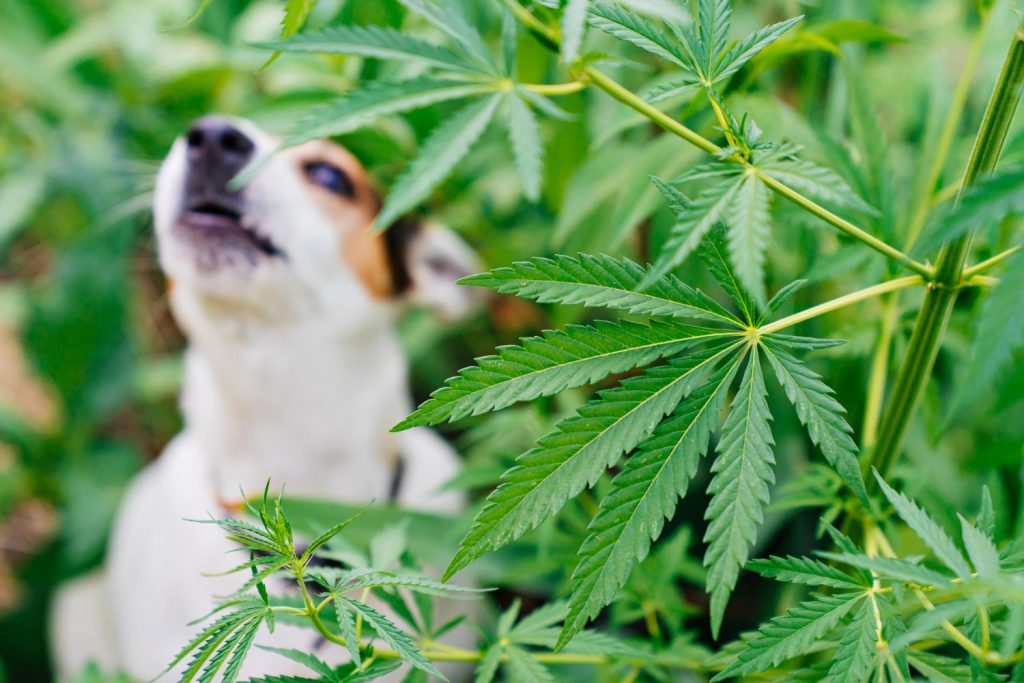
Pet CBD oil vs human CBD oil — are they different
Pet cannabidiol (CBD) oil and human CBD oil start from the same source — hemp. Both contain cannabinoids extracted from the same plant, using the same methods, suspended in the same types of carrier oils. The raw extract is, at a molecular level, identical. So why do separate pet and human products exist, and does the distinction actually matter?
It does. The differences aren’t in the cannabidiol molecule itself but in concentration, formulation and additives. A product designed for a 70 kg adult delivers a very different amount per drop than one designed for a 10 kg dog. Flavourings safe for humans can be toxic to animals. Tetrahydrocannabinol (THC) sensitivity varies significantly between species. These practical differences make pet-specific CBD oil a separate product category for good reason.
This article covers what pet and human CBD oils share, where they differ, why swapping one for the other carries risk, and what to check before buying a CBD oil for a pet. For the science behind different cannabinoids, the CBD, CBG and CBN comparison explains each compound.
What pet and human CBD oils have in common
The cannabidiol in pet CBD oil is the same compound as the cannabidiol in human CBD oil. Same molecular structure. Same extraction process. EU Labs extracts both its human and pet CBD oils using supercritical CO₂ extraction — carbon dioxide pushed through dried hemp under pressure and temperature to separate cannabinoids and terpenes from plant material. No solvents, no chemical residue.
Both product types use carrier oils to suspend the extract. Medium-chain triglyceride (MCT) coconut oil is the most common carrier across human and pet formulations — it’s flavourless, easily digestible for most species and improves cannabinoid absorption. The hemp oil vs CBD oil article explains how different carrier oils compare.
Both require the same quality verification. A certificate of analysis (COA) from an independent third-party lab should accompany any CBD oil — pet or human. The COA confirms cannabinoid concentrations, THC levels and contaminant screening results for the specific batch. The same six testing panels apply: cannabinoid potency, heavy metals, pesticides, residual solvents, microbial contamination and mycotoxins. The third-party lab testing article covers what each panel checks.
Where pet and human CBD oils differ
The differences between pet and human CBD oil are formulation decisions — not cannabinoid chemistry. Four factors separate the two product categories in practice.
Concentration. Pet CBD oils are typically formulated at lower concentrations than human products. The EU Labs Pet CBD Oil 2000mg delivers 40 mg of cannabidiol per millilitre in a 50 mL bottle. Compare that to the EU Labs CBD Oil 3000mg for humans at 60 mg/mL, or the 12000mg at 240 mg/mL. Lower concentration means each drop delivers less CBD, making it easier to measure small servings appropriate for an animal’s body weight.
Flavouring and additives. Some human CBD oils include flavourings — mint, citrus, berry — to improve taste. Certain flavourings and additives safe for humans are toxic to pets. Xylitol, an artificial sweetener found in some human wellness products, is extremely toxic to dogs even in small amounts. Essential oils like tea tree, peppermint and citrus oils can be harmful to cats. Pet-specific CBD oils either contain no added flavouring or use pet-safe alternatives.
THC content. Dogs are significantly more sensitive to THC than humans. Even the trace amounts of tetrahydrocannabinol present in full spectrum CBD oil — below 0.3% by weight — represent a higher relative exposure for a small animal than for an adult human. Pet CBD products often use broad spectrum formulations with THC removed below detectable limits, or full spectrum formulations at concentrations calibrated for animal body weight. EU Labs Pet CBD Oil 2000mg is a full spectrum product — the COA confirms exact THC levels for each batch.
Dosing guidance. Human CBD oil labels provide serving suggestions based on adult body weight ranges. Pet products are formulated with animal weight categories in mind — a 5 kg cat requires a fundamentally different amount than a 40 kg Labrador. Per-drop delivery at a lower concentration gives more control over small adjustments.
Why not just use human CBD oil for a pet
Some people assume a human CBD oil can substitute for a pet product at a smaller dose. The logic seems straightforward — same cannabinoid, just use fewer drops. In practice, three risks make this approach problematic.
First, concentration mismatch. A single drop from a 12000mg human CBD oil (240 mg/mL) delivers approximately 12 mg of cannabidiol. For a 5 kg cat, that single drop may represent a significant portion of any reasonable serving. Measuring a fraction of a drop from a high-concentration product is impractical with a standard glass dropper. A pet-specific oil at 40 mg/mL gives roughly 2 mg per drop — much easier to dose accurately for smaller animals.
Second, hidden additives. Not every ingredient listed on a human CBD oil label is safe for animals. A product might include a natural flavouring or terpene blend that’s harmless for humans but problematic for a dog or cat. Unless every ingredient is verified as pet-safe, substituting carries an ingredient risk that a pet-specific formulation avoids by design.
Third, no veterinary input. Using any CBD product with a pet should involve a conversation with a veterinarian. Vets can advise on whether CBD oil is appropriate for the specific animal, account for existing conditions or medications, and help determine a starting point for serving size. Using a human product without veterinary guidance doubles the uncertainty — unknown formulation plus no professional input.
What to check when buying CBD oil for a pet
The verification process for pet CBD oil mirrors what applies to human CBD oil, with a few additional considerations.
Certificate of analysis. Batch-specific COA from an independent third-party lab. The cannabinoid panel should confirm CBD concentration matching the label, and THC levels should be clearly reported. All contaminant panels — heavy metals, pesticides, residual solvents, microbial, mycotoxins — should show “Pass.” The same standards that apply to human CBD oil apply to pet products.
Ingredient list. Every ingredient should be named on the label. Check for additives that may be harmful to the target species — particularly sweeteners (xylitol), essential oils and artificial flavourings. A pet CBD oil with only two ingredients — hemp extract and MCT coconut oil — carries the lowest additive risk.
Appropriate concentration. Match the product concentration to the animal’s size. A 2000mg oil at 40 mg/mL suits most dogs and cats — each drop delivers roughly 2 mg, making it practical to measure servings for animals between 5 kg and 40 kg. The CBD oil concentrations article explains the maths behind mg/mL and per-drop delivery.
Spectrum type. Full spectrum pet CBD oil contains trace THC. Broad spectrum removes THC below detectable limits. Given the heightened THC sensitivity in dogs, some pet owners prefer broad spectrum. Others choose full spectrum at a pet-appropriate concentration after consulting a vet. The full spectrum vs broad spectrum comparison explains the trade-off.
Veterinary consultation. Talk to a vet before starting any CBD product with a pet. A veterinarian can assess whether CBD oil is appropriate for the specific animal, check for interactions with existing medications, and recommend a starting approach. This step is not optional.
EU Labs Pet CBD Oil
The EU Labs Pet CBD Oil 2000mg Full Spectrum delivers 40 mg of cannabidiol per millilitre in a 50 mL glass dropper bottle — a concentration designed for pet body weights rather than human ones. EU Labs extracts the oil using supercritical CO₂ and suspends the extract in MCT coconut oil. No added flavourings, no artificial sweeteners, no essential oil blends.
Every batch undergoes independent third-party testing. The COA covers cannabinoid potency (including exact THC content), heavy metals, pesticides, residual solvents, microbial contamination and mycotoxins. The batch number on the bottle links directly to the corresponding lab report.
The full EU Labs range — including human CBD, cannabigerol (CBG) and cannabinol (CBN) oils at various concentrations — is available in the Stillroot shop. For those new to buying CBD oil online in Australia, that guide covers the purchasing process.
Frequently asked questions
Can I give my dog human CBD oil?
Using human CBD oil for a dog is not recommended without veterinary guidance. Human products are formulated at higher concentrations, may contain flavourings or additives unsafe for dogs, and provide THC levels calibrated for adult human body weight — not a 10 or 20 kg animal. A pet-specific product like EU Labs Pet CBD Oil 2000mg at 40 mg/mL delivers a lower, more controllable dose per drop.
Is pet CBD oil the same cannabinoid as human CBD oil?
Yes. The cannabidiol molecule in pet and human CBD oil is chemically identical — same compound extracted from the same hemp plant. The differences are in formulation: concentration per millilitre, additives, flavouring and THC levels. The CBD itself does not change between pet and human products.
Why is pet CBD oil less concentrated than human CBD oil?
Animals weigh less than adult humans, so each drop needs to deliver less cannabidiol for accurate dosing. EU Labs Pet CBD Oil 2000mg delivers 40 mg/mL — roughly 2 mg per drop. The human EU Labs CBD Oil 3000mg delivers 60 mg/mL — roughly 3 mg per drop. The lower concentration makes it practical to measure small servings for pets between 5 kg and 40 kg.
Should I choose full spectrum or broad spectrum CBD oil for my pet?
Dogs are more sensitive to THC than humans. Full spectrum pet CBD oil contains trace THC below 0.3%, while broad spectrum removes THC below detectable limits. Some pet owners prefer broad spectrum to eliminate any THC exposure. Consult a veterinarian to determine which spectrum type is appropriate for your specific animal.
Do I need to talk to a vet before giving my pet CBD oil?
Yes. A veterinarian can assess whether CBD oil is appropriate for the specific animal, check for interactions with existing medications, and advise on a starting serving size based on species, breed and body weight. Starting a CBD oil routine with a pet without veterinary consultation is not recommended.
These products have not been evaluated by the TGA. They are not intended to diagnose, treat, cure, or prevent any disease. You must be 18+ to purchase. Please consult a healthcare professional before use.