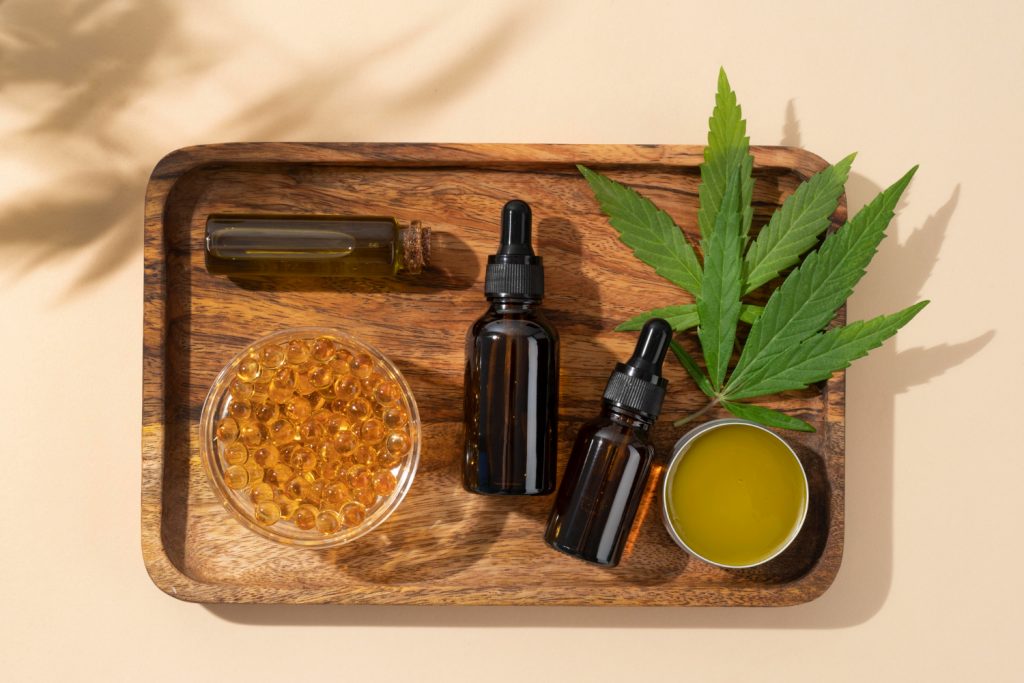
How to use a CBD oil dropper — getting consistent drops
Most cannabidiol (CBD) oil ships in a glass bottle with a built-in dropper — a rubber bulb attached to a graduated glass pipette. The dropper is both the dispensing tool and the measuring device. Knowing how to use it properly means getting a consistent amount of CBD each time, which matters when adjusting serving sizes over days and weeks.
This article covers how the dropper works, how to calculate milligrams per drop at different concentrations, the sublingual method for taking CBD oil, and how to store the bottle so the oil stays stable. For those still deciding which product to buy, the beginner’s checklist covers that step first. The full spectrum vs broad spectrum guide explains the difference between the two main product types.
How a glass dropper works
The dropper consists of two parts: a rubber squeeze bulb at the top and a glass tube (pipette) with measurement markings below. Standard CBD oil droppers from 50 mL bottles hold approximately 1 mL of oil when fully drawn. The graduated markings on the glass tube typically show 0.25 mL, 0.5 mL, 0.75 mL and 1.0 mL — making it straightforward to measure partial servings.
To draw oil from the bottle: squeeze the rubber bulb completely to push out any air, insert the glass tube into the oil, then release the bulb slowly. Suction pulls oil up into the tube. Check the measurement line to confirm the amount. If you’ve drawn too much, hold the dropper over the bottle opening and squeeze the bulb gently to release the excess back in.
Two common mistakes. First, squeezing the bulb after inserting the tube — this pushes air into the oil and creates bubbles that make measurement inaccurate. Squeeze before inserting, not after. Second, holding the bottle at an angle while drawing. Holding the bottle upright ensures the tube submerges fully and draws oil evenly.
How many milligrams in one drop
A standard glass dropper dispenses approximately 20 drops per millilitre, though the exact count varies slightly with oil viscosity and dropper design. Using 20 drops per mL as the baseline, the calculation for any CBD oil is straightforward: divide the concentration (mg/mL) by 20.
For the EU Labs CBD Oil 3000mg in a 50 mL bottle, the concentration is 60 mg of cannabidiol per millilitre. At 20 drops per mL, each drop delivers approximately 3 mg of CBD. A quarter-dropper (0.25 mL, roughly 5 drops) delivers about 15 mg. A half-dropper (0.5 mL, roughly 10 drops) delivers about 30 mg.
The EU Labs CBD Oil 12000mg in the same 50 mL bottle size delivers 240 mg/mL — four times the concentration. Each drop provides approximately 12 mg of CBD. A quarter-dropper delivers about 60 mg. That’s why higher concentrations suit people who already know their preferred serving size. Starting with a 3000mg concentration gives more room to measure small amounts precisely.
Quick reference for EU Labs 50 mL bottles:
- 3000mg (60 mg/mL): ~3 mg per drop | ~15 mg per quarter-dropper | ~30 mg per half-dropper
- 12000mg (240 mg/mL): ~12 mg per drop | ~60 mg per quarter-dropper | ~120 mg per half-dropper
The CBD oil concentrations article covers the full maths behind mg/mL calculations, and the 3000mg vs 12000mg comparison explains when each concentration makes practical sense.
The sublingual method
Sublingual means “under the tongue.” The area beneath the tongue has a thin mucous membrane with a dense network of capillaries close to the surface, which allows compounds to absorb directly without passing through the digestive system first. Most CBD oil users take their serving sublingually.
The process takes under a minute. Draw the desired amount into the dropper. Lift your tongue. Squeeze the drops into the space beneath it. Lower your tongue and hold the oil in place for 30 to 60 seconds — some people hold for up to two minutes. Then swallow whatever remains. Most people notice onset within 15 to 20 minutes.
Avoid eating or drinking for five minutes before and after taking CBD oil sublingually. Food or liquid in the mouth can dilute the oil and reduce sublingual contact time. After swallowing, the remaining cannabinoids pass through the digestive system and absorb more slowly as a secondary pathway.
Tips for consistent servings
Consistency matters more than precision. Small variations between drops are normal — the goal is a repeatable routine, not laboratory-grade measurement. These habits help keep servings consistent from one day to the next.
Hold the bottle upright. Tilting the bottle changes how the dropper draws oil and how drops form at the tip. Vertical position produces the most uniform drops.
Squeeze slowly. A fast squeeze produces large, uneven drops. A slow, steady squeeze lets each drop form fully and detach cleanly from the glass tip. Count drops if precision matters — counting to a target number is more repeatable than eyeballing the measurement line.
Use the same time each day. Taking CBD oil at the same time — morning, evening, or both — builds a routine that makes it easier to track how much you’re using and how the serving size evolves over time.
Keep a simple log for the first two weeks. Note the date, time, number of drops and concentration. After two weeks, the routine is usually stable enough to drop the log. This step is especially useful during the adjustment period when serving size may change.
Storing CBD oil properly
CBD oil stored correctly remains stable for 12 to 24 months from the production date. Stored poorly, cannabinoids degrade faster and the oil’s potency drops before the expiry date.
Three factors affect shelf life: light, heat and air exposure. Ultraviolet light breaks down cannabinoids over time, which is why EU Labs bottles use dark glass. Heat accelerates degradation — store the bottle in a cool place between 16°C and 21°C, away from stovetops, radiators or windowsills. Air exposure oxidises both the carrier oil and the cannabinoids, so seal the cap tightly after every use.
A kitchen cupboard or pantry away from direct sunlight works well. Refrigeration isn’t necessary unless the ambient temperature regularly exceeds 25°C. Cold temperatures can thicken the oil, making drops slower to dispense — not harmful, just less convenient. If the oil has been refrigerated, let the bottle sit at room temperature for a few minutes before use.
Check the batch date or expiry printed on the bottle. Once opened, use the oil within six months for best results. EU Labs bottles are 50 mL — at a typical serving of 0.25–0.5 mL per day, one bottle lasts roughly three to six months. For more on what’s inside the bottle and how it’s made, the CO₂ extraction process article covers the manufacturing side. The hemp oil vs CBD oil guide explains the difference between carrier oils.
Frequently asked questions
How many drops are in a full dropper?
A full dropper from a standard 50 mL CBD oil bottle holds approximately 1 mL of oil, which dispenses roughly 20 drops. The exact count varies slightly depending on dropper design and oil viscosity. EU Labs 50 mL bottles use a graduated glass dropper marked at 0.25 mL intervals for easier measurement.
Can I put CBD oil drops in food or drinks instead of under my tongue?
Yes, CBD oil can be added to food or drinks. Mixing CBD oil into a meal or beverage means the cannabinoids pass through the digestive system rather than absorbing sublingually, which typically results in slower onset. The sublingual method allows faster absorption because the oil contacts the capillary-rich membrane under the tongue directly.
How do I know if I’m using the right amount?
Start with a small serving — a quarter-dropper (roughly 0.25 mL) is a common beginning point. Use the same amount at the same time each day for at least one to two weeks before adjusting. Consult a healthcare professional for guidance specific to your situation. The concentrations explained article covers the mg/mL maths.
Does CBD oil go bad?
CBD oil has a shelf life of 12 to 24 months when stored properly — in a cool, dark place with the cap sealed tightly after each use. Signs of degradation include a change in colour, thicker consistency, or an unusual smell. An expired or degraded oil won’t be harmful but may deliver less cannabidiol per drop than the label indicates.
What is the difference between a 3000mg and 12000mg dropper serving?
Both bottles are 50 mL with the same dropper, but the concentration differs. One drop from the 3000mg bottle (60 mg/mL) delivers approximately 3 mg of CBD. One drop from the 12000mg bottle (240 mg/mL) delivers approximately 12 mg. The dropper is the same; the concentration per drop is four times higher. Browse the full range in the Stillroot shop.
These products have not been evaluated by the TGA. They are not intended to diagnose, treat, cure, or prevent any disease. You must be 18+ to purchase. Please consult a healthcare professional before use.