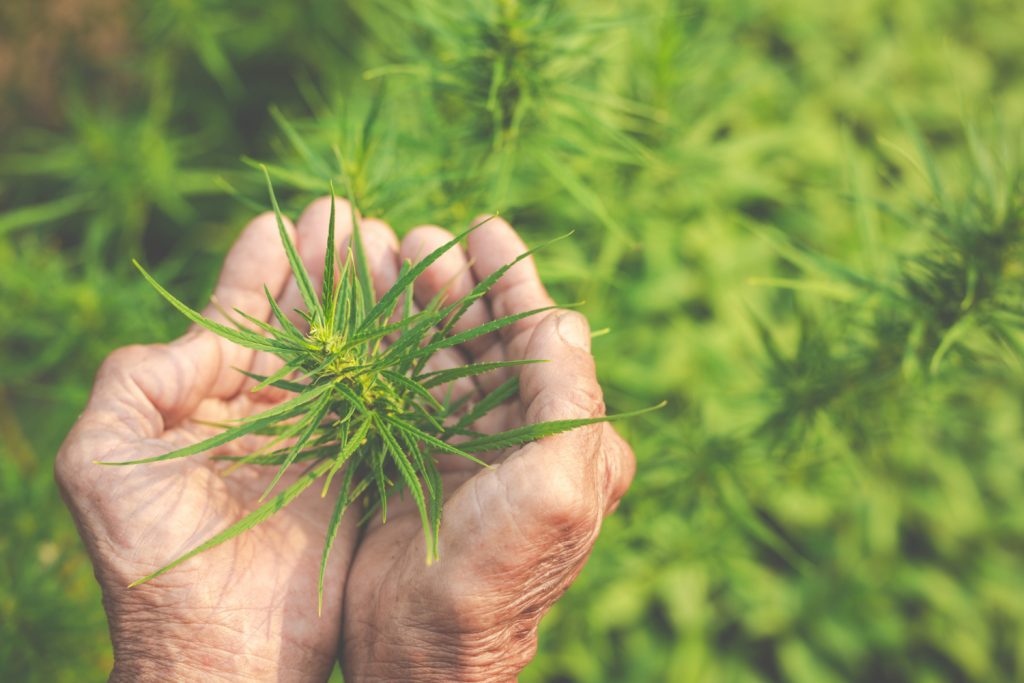
From hemp plant to oil bottle
CBD oil doesn’t come out of the ground ready to use. It starts as a hemp plant growing in a field, and by the time it reaches a dropper bottle, it has been through harvesting, drying, extraction, purification, formulation and testing. The extraction step — where cannabinoids and terpenes are separated from the plant material — is the part that defines the quality of the final product.
Several extraction methods exist. Solvent extraction uses chemicals like ethanol or butane to dissolve cannabinoids from the plant. Olive oil extraction is a simpler, lower-tech approach used in small-scale production. But the method that dominates commercial CBD manufacturing — and the one EU Labs uses across its entire range — is supercritical CO₂ extraction.
What supercritical CO₂ extraction actually is
Carbon dioxide, the same gas you exhale, can behave as both a liquid and a gas simultaneously under specific conditions of temperature and pressure. Above 31.1°C and 73.8 bar (roughly 1,070 psi), CO₂ enters a “supercritical” state — it has the density of a liquid but the diffusion properties of a gas. In this state, it becomes an excellent solvent for pulling cannabinoids, terpenes and other compounds out of dried hemp material.
The process works in stages. Dried, ground hemp goes into an extraction vessel. Supercritical CO₂ is pumped through the material, dissolving the cannabinoids and terpenes as it passes through. The CO₂ carrying the dissolved compounds then moves to a separator, where pressure and temperature are reduced. The CO₂ reverts to gas and evaporates, leaving behind the concentrated hemp extract. The CO₂ is captured and recycled back into the system.
No chemical solvents touch the hemp during this process. The CO₂ itself is the solvent, and it leaves no residue in the final product. When the extraction is finished, what remains is a thick, concentrated extract containing cannabinoids, terpenes and other hemp compounds — with no butane, ethanol or petroleum derivatives to remove.
Why CO₂ over other methods
Solvent extraction is cheaper and faster. Ethanol, in particular, is efficient at pulling cannabinoids from hemp at scale. But it also pulls chlorophyll, waxes and other unwanted compounds, which then need to be removed through additional filtration and purification steps. Butane extraction carries flammability risks and requires careful purging to ensure no residual solvent remains in the oil.
CO₂ extraction is more selective. By adjusting temperature and pressure, the operator can target specific compounds — pulling cannabinoids and terpenes while leaving behind many of the unwanted plant materials. The result is a cleaner crude extract that requires less post-processing. The trade-off is cost. The equipment is expensive, the process is slower, and the operator needs technical expertise to dial in the right parameters for each run.
For a consumer, the practical difference shows up in the lab report. CO₂-extracted oils tend to have cleaner contaminant profiles — lower residual solvents, fewer unwanted compounds. EU Labs publishes third-party lab reports for every batch, and the contaminant screening consistently reflects the advantages of CO₂ extraction: residual solvents below detection limits, clean heavy metal panels, no pesticide residues.
After extraction — what happens next
The raw extract from a CO₂ system isn’t the finished product. It’s a thick, dark concentrate that needs processing before it goes into a bottle. The next steps depend on whether the final product is full spectrum, broad spectrum or isolate.
For full spectrum oils like the EU Labs CBD Oil 12000mg Full Spectrum, the extract is refined to remove plant waxes and lipids (a process called winterisation), then diluted to the target concentration using MCT coconut oil. The cannabinoid profile — CBD, trace THC below 0.3%, minor cannabinoids, terpenes — stays intact.
For broad spectrum oils like the CBD Oil 12000mg Broad Spectrum, an additional step removes THC from the extract while preserving the other cannabinoids and terpenes. This requires chromatography or similar separation techniques — precision work that adds complexity to the manufacturing process.
Once the extract reaches its target profile, it’s blended with MCT carrier oil to the specified concentration — 60 mg/mL for the 3000 mg range, 240 mg/mL for the 12000 mg range. The blended oil is then bottled, labelled with a batch number, and sent for independent testing.
The role of the carrier oil
Cannabinoid extracts are fat-soluble. They don’t dissolve in water. A carrier oil is necessary to create a product you can measure and dispense with a dropper. EU Labs uses MCT (medium-chain triglyceride) coconut oil across every product in the range — CBD, CBG, CBN and Pet CBD.
MCT oil is the most common carrier in the CBD industry for practical reasons. It’s flavourless, odourless, stable at room temperature, and doesn’t go rancid quickly. It also blends well with cannabinoid extracts, creating a homogeneous oil that delivers consistent concentration from the first drop to the last.
Other carriers exist — hemp seed oil, olive oil, grapeseed oil — but each introduces its own flavour profile and shelf-life considerations. MCT is the industry standard because it stays out of the way and lets the cannabinoid extract do what it’s supposed to.
Testing the finished product
Before any EU Labs product reaches the Stillroot store, it goes through independent third-party lab testing. An accredited laboratory analyses the oil and produces a certificate of analysis (COA) that covers two categories: what’s supposed to be there, and what shouldn’t be.
The cannabinoid panel confirms the CBD (or CBG/CBN) concentration matches the label claim. It also shows the levels of other cannabinoids present — THC, CBC, and any others detected. For full spectrum products, you’ll see a trace THC figure. For broad spectrum, THC reads as non-detectable.
The contaminant panel screens for heavy metals (lead, arsenic, mercury, cadmium), pesticides, residual solvents and microbial impurities. CO₂ extraction contributes to clean results on the solvents panel because there are no chemical solvents to leave behind. The heavy metals and pesticides results reflect the quality of the hemp source — another reason why sourcing from regulated Colorado farms matters.
Every bottle carries a batch number that links to its specific lab report. The report isn’t a generic document for the entire product line — it’s tied to the production run that filled your bottle. That traceability is what separates tested products from products that simply claim to be tested.
These products have not been evaluated by the TGA. They are not intended to diagnose, treat, cure, or prevent any disease. You must be 18+ to purchase. Please consult a healthcare professional before use.