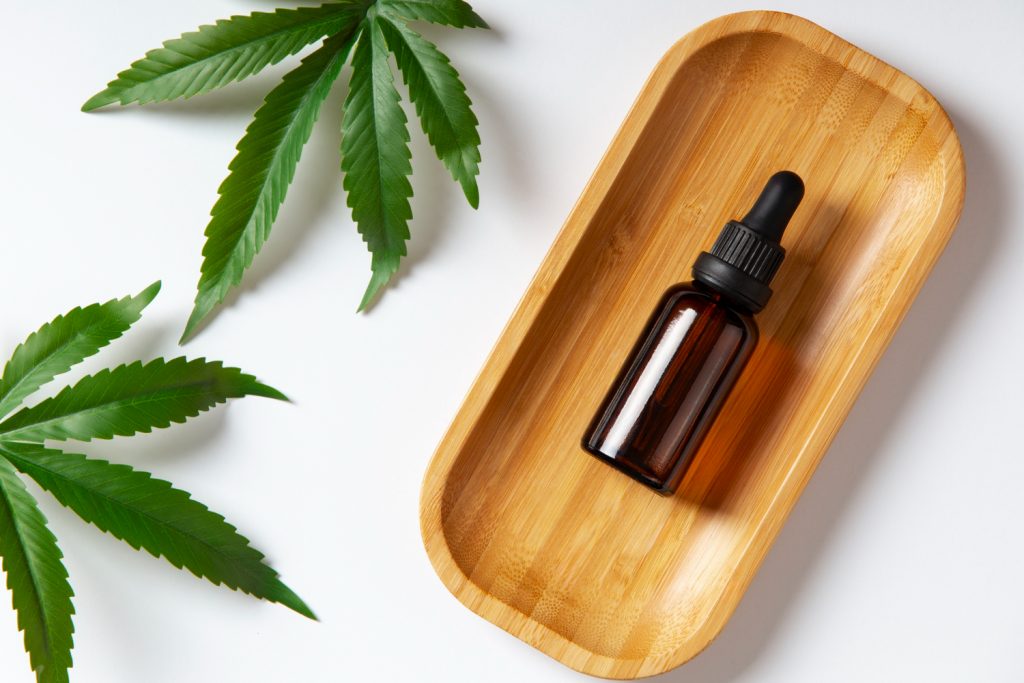
Full spectrum CBD oil in Australia — what to look for
Full spectrum cannabidiol (CBD) oil contains CBD alongside every other naturally occurring compound in the hemp plant — minor cannabinoids like cannabigerol (CBG), cannabinol (CBN) and CBC, plus terpenes, flavonoids and trace amounts of tetrahydrocannabinol (THC) below 0.3%. The term “full spectrum” means nothing was selectively removed after extraction. Everything the plant produced stays in the bottle.
That’s the standard definition. The harder part is knowing what to verify before buying — especially in Australia, where the Therapeutic Goods Administration (TGA) schedules CBD products based on composition, concentration and daily dose. A label that says “full spectrum” doesn’t automatically confirm what’s inside.
This article covers what full spectrum CBD oil contains, how Australian regulations apply, what to look for on a certificate of analysis (COA) — a third-party lab report verifying cannabinoid content and contaminant levels — and where EU Labs full spectrum products fit in the range. For a direct comparison with THC-free alternatives, the full spectrum vs broad spectrum breakdown covers that ground.
What full spectrum actually means
Full spectrum CBD oil is a hemp extract that retains the plant’s complete chemical profile — cannabidiol as the primary cannabinoid, plus minor cannabinoids (CBG, CBN, CBC, CBDV), terpenes (myrcene, limonene, beta-caryophyllene), flavonoids and trace THC at concentrations typically below 0.3% by weight. The word “full” refers to what stays in the oil after processing. Nothing selectively removed. No compounds targeted for elimination.
The extraction step determines how much of that profile survives. CO₂ extraction — supercritical carbon dioxide pushed through dried hemp to separate cannabinoids and terpenes from plant material — preserves heat-sensitive terpenes without leaving chemical residue. EU Labs uses supercritical CO₂ extraction across the entire product line. The CO₂ extraction process article explains the technical steps.
Two other spectrum types exist for comparison. Broad spectrum CBD oil goes through an additional post-extraction step to remove THC below detectable limits while keeping other compounds intact. CBD isolate strips everything except pure cannabidiol at 99%+ purity. Full spectrum sits at one end of that processing scale: the least refined, the most chemically complex.
Why does spectrum type matter? It comes down to what ends up in the bottle. Full spectrum contains trace THC. Broad spectrum does not. Isolate contains CBD alone. The practical difference affects workplace drug testing considerations, personal preference and how the product is classified under Australian regulations. For a side-by-side of all three types, see the full spectrum vs broad spectrum comparison.
The entourage effect — theory, not proven fact
The entourage effect is a hypothesis proposing that cannabinoids, terpenes and flavonoids in hemp produce better results together than any single compound in isolation. Proponents argue that full spectrum CBD oil delivers this synergy because the extract preserves the plant’s natural chemical profile intact. The concept dates to 1998, but scientific consensus on whether the entourage effect actually occurs in humans remains mixed after more than two decades of research.
Some pre-clinical studies show full spectrum hemp extracts producing different outcomes than CBD isolate at equivalent doses. A 2019 study testing terpene interaction with cannabinoid receptors found no measurable synergistic effect between terpenes and THC on CB1 or CB2 receptors. Other researchers point to the broader cannabinoid interaction — CBD with CBG, CBN and CBC — as the more plausible mechanism. The evidence points in multiple directions. Critics argue the term functions more as a marketing concept than a pharmacologically validated mechanism.
For buyers, the practical takeaway is straightforward. Full spectrum CBD oil contains more compounds than broad spectrum or isolate — that’s a verifiable fact on any COA. Whether those additional compounds produce a synergistic benefit remains an open scientific question. Choosing full spectrum based on the entourage effect alone means choosing based on a theory, not a proven outcome. Product composition, extraction quality and third-party lab verification matter more than any claim about how compounds interact inside the body.
Full spectrum CBD and Australian regulations
Australia’s Therapeutic Goods Administration (TGA) classifies CBD products under two schedules that determine how they can be supplied. Schedule 3 allows pharmacist-only supply of cannabidiol at a maximum daily dose of 150 mg — no prescription required. Schedule 4 covers higher doses, multi-cannabinoid formulations and any product that doesn’t meet Schedule 3 criteria, requiring a prescription from an authorised prescriber.
Full spectrum CBD oil typically contains multiple cannabinoids beyond CBD — CBG, CBN, CBC and trace THC — which places most full spectrum products under Schedule 4 in practice. As of early 2026, no full spectrum CBD product appears on the Australian Register of Therapeutic Goods (ARTG) for Schedule 3 over-the-counter sale. Most Australians accessing full spectrum CBD oil do so through prescription pathways or authorised prescriber schemes. The CBD oil legality in Australia article covers the full regulatory framework.
The THC threshold adds another regulatory layer. The TGA’s Therapeutic Goods Order 93 (TGO 93) sets quality requirements for medicinal cannabis products in Australia, including assay limits for cannabinoid content. Full spectrum CBD oil with THC below 0.3% by weight falls within standard hemp-derived product parameters, but the presence of any THC — even at trace levels — affects how the product is classified and supplied under TGA medicinal cannabis regulations.
What does this mean for the buyer? Check the product’s scheduling status before purchasing. Understand whether a prescription is required. Verify THC content on the certificate of analysis. The buying CBD oil in Australia guide covers the purchasing process step by step, and the CBD oil without a prescription article explains the current over-the-counter landscape.
How to check a full spectrum COA
A certificate of analysis is the only reliable way to verify that a full spectrum CBD oil contains what the label claims. Issued by an independent third-party laboratory — not the manufacturer — a COA reports individual cannabinoid concentrations, THC levels and contaminant screenings for every tested batch. Without a COA, any “full spectrum” claim on a label is unverifiable marketing.
Start with the cannabinoid panel. A genuine full spectrum COA lists CBD as the dominant cannabinoid, with measurable concentrations of CBG, CBN, CBC and possibly CBDV. Trace THC should appear at or below 0.3% by weight. If the COA shows only CBD and THC with everything else at zero or not tested, the product may be a relabelled isolate or poorly processed extract — not genuine full spectrum. The presence of multiple cannabinoids at measurable levels is what separates full spectrum from the rest.
Check that the CBD concentration matches the label claim. EU Labs CBD Oil 3000mg Full Spectrum delivers 60 mg of cannabidiol per millilitre in a 50 mL bottle. The COA should confirm concentration within 10–15% of that printed number. Larger deviations suggest manufacturing inconsistency or poor quality control. The CBD oil concentrations explained article breaks down what mg/mL means in practice.
Contaminant panels matter as much as cannabinoid levels. A complete COA tests for heavy metals (lead, arsenic, mercury, cadmium), pesticide residues, residual solvents from extraction and microbial contamination (mould, E. coli, salmonella). “Pass” across every panel is the minimum standard. “Not tested” on any contaminant panel is a red flag — it means the manufacturer either skipped the test or chose not to publish the results.
Confirm the COA is batch-specific. A single COA covering “all products” rather than a specific batch number offers no meaningful quality assurance. Every EU Labs bottle carries a batch number linking to an independent lab report. For an explanation of common COA abbreviations — LOD, LOQ, ND — a guide to COA testing terms covers those definitions in detail.
What EU Labs offers in full spectrum
EU Labs produces full spectrum CBD oil at two concentrations. The EU Labs CBD Oil 3000mg Full Spectrum delivers 60 mg of CBD per millilitre — 3000 mg total cannabidiol across a 50 mL glass dropper bottle. The EU Labs CBD Oil 12000mg Full Spectrum delivers 240 mg/mL — four times the concentration per drop from the same 50 mL bottle size. Both use MCT coconut oil as the carrier and come from CO₂-extracted hemp. The 3000mg vs 12000mg comparison walks through the practical differences between concentrations.
Both EU Labs full spectrum products undergo batch-specific third-party testing covering the full cannabinoid panel, THC compliance below 0.3%, heavy metals, pesticides and microbial contaminants. The COA for each batch is available for verification. Every bottle carries a batch number that links directly to the corresponding independent lab report.
EU Labs also makes broad spectrum alternatives — with THC removed below detectable limits — for buyers who prefer a zero-THC option. The full product range, including CBG and CBN oils, is available in the Stillroot shop. For those new to buying CBD oil online in Australia, that guide covers the process from product selection through delivery.
Frequently asked questions
What is the difference between full spectrum and broad spectrum CBD oil?
Full spectrum CBD oil retains every compound from the hemp extract, including trace THC below 0.3%. Broad spectrum goes through additional chromatographic processing to remove THC below detectable limits while keeping other cannabinoids and terpenes intact. The cannabinoid profiles are nearly identical aside from the THC content. For a detailed comparison, see the full spectrum vs broad spectrum CBD oil article.
Does full spectrum CBD oil contain enough THC to cause intoxication?
Full spectrum CBD oil typically contains THC below 0.3% by weight — a trace concentration far below levels associated with intoxication. EU Labs full spectrum products list exact THC concentrations on batch-specific certificates of analysis. The trace THC in full spectrum hemp extract is a residual component of the plant’s natural cannabinoid profile, not a psychoactive dose.
Can I buy full spectrum CBD oil over the counter in Australia?
As of early 2026, no full spectrum CBD product appears on the Australian Register of Therapeutic Goods (ARTG) for Schedule 3 pharmacist-only sale. Most full spectrum CBD oil in Australia is supplied under Schedule 4, which requires a prescription from an authorised prescriber. The CBD oil without a prescription article explains the current over-the-counter access options.
How do I know if a full spectrum CBD oil is genuine?
Check the certificate of analysis from an independent third-party lab. A genuine full spectrum COA shows measurable levels of CBD alongside minor cannabinoids — CBG, CBN, CBC — plus trace THC below 0.3%. If the COA lists only CBD with all other cannabinoids at zero, the product is likely an isolate or over-processed extract marketed as full spectrum.
What carrier oil does EU Labs use in full spectrum CBD oil?
EU Labs uses medium-chain triglyceride (MCT) coconut oil as the carrier in all CBD oil formulations, including full spectrum products. MCT oil is widely used for cannabinoid products because cannabinoids are fat-soluble and MCT improves absorption. Other carriers include hemp seed oil and olive oil — the hemp oil vs CBD oil article explains how carrier oils compare.
These products have not been evaluated by the TGA. They are not intended to diagnose, treat, cure, or prevent any disease. You must be 18+ to purchase. Please consult a healthcare professional before use.