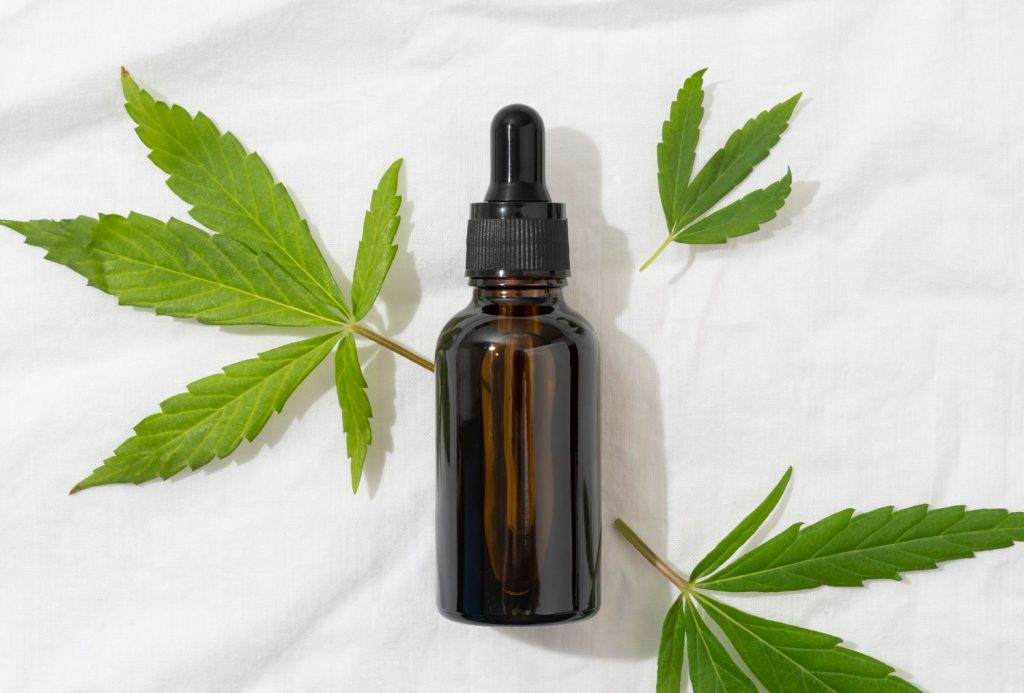
CBN oil and evening routines — a popular choice
Cannabinol (CBN) is the cannabinoid most commonly associated with evening and bedtime routines among cannabinoid users. Unlike cannabidiol (CBD), which people use throughout the day, and cannabigerol (CBG), which is popular in morning routines, CBN has earned a specific reputation as a nighttime cannabinoid. That reputation comes from how the compound is formed and from user preference patterns — not from verified clinical claims about what CBN does inside the body.
This article covers what CBN is, how it forms, why people choose it for evening use, how to incorporate it into a routine and what to check before buying. For a detailed comparison between all three cannabinoids, the CBD, CBG and CBN comparison covers the differences side by side.
What cannabinol is and how it forms
Cannabinol (CBN) is a cannabinoid that forms when tetrahydrocannabinol (THC) degrades over time through oxidation and exposure to light, heat and air. CBN doesn’t come directly from the hemp plant’s biosynthesis pathway the way CBD and CBG do. Instead, THC molecules in harvested hemp material gradually convert into CBN as the plant ages. Older hemp naturally contains more CBN than freshly harvested material.
This degradation pathway means CBN is sometimes called the “aged cannabinoid.” It’s non-intoxicating — CBN does not produce the psychoactive effects associated with THC, despite being formed from it. The molecular change during oxidation alters the compound’s interaction with cannabinoid receptors. CBN binds weakly to both CB1 and CB2 receptors, producing a different receptor interaction profile than THC, CBD or CBG.
Manufacturing CBN oil in meaningful quantities requires either starting with THC-rich cannabis and facilitating the conversion process, or isolating CBN from hemp extract through chromatographic separation. The production challenge contributes to CBN oil’s higher price point compared to CBD oil. For a deeper look at the cannabinoid itself, the what is CBN oil article covers the science in detail.
Why people choose CBN for evening routines
CBN has become associated with evening use through a combination of anecdotal tradition and market positioning. Early cannabis folklore linked aged cannabis — which naturally contains higher CBN levels — with sedation. The association stuck, and CBN products are now almost exclusively marketed as nighttime or evening products.
The scientific evidence for CBN as a standalone sedative is limited. A frequently cited 1975 study tested CBN in combination with THC, not alone. More recent research has not conclusively established that isolated CBN produces sedation at the doses found in commercial oils. What the user community reports is a preference — people who include CBN in their evening routine tend to use it consistently at bedtime as part of a wind-down pattern, alongside other routine elements like dimming lights or reducing screen time.
The practical reality is that many Australians use CBN oil in the evening and report satisfaction with that routine. Whether the compound itself drives that satisfaction or whether the routine structure contributes is an open question. Either way, CBN oil is positioned as an evening product in the market, and that’s how most users incorporate it.
The distinction matters for informed purchasing. Choosing CBN oil because “it makes you sleepy” is choosing based on an unverified claim. Choosing CBN oil because it fits into an evening routine alongside other wind-down habits is choosing based on how people actually use the product.
How to incorporate CBN oil into an evening routine
The method is identical to any other cannabinoid oil. Sublingual administration — drops placed under the tongue, held for 30 to 60 seconds, then swallowed — is the most common approach. Most people report onset within 15 to 20 minutes, with the experience lasting two to three hours.
Timing depends on the routine. Some people take CBN oil 30 minutes before bed. Others incorporate it earlier in the evening — after dinner, during a wind-down period. The routine structure matters more than the exact minute. Consistency helps: same time, same serving, same method, every evening.
Starting low is the standard approach with any cannabinoid. The EU Labs CBN Oil 3000mg delivers 60 mg of cannabinol per millilitre in a 50 mL bottle. A quarter-dropper (0.25 mL) provides approximately 15 mg of CBN. The EU Labs CBN Oil 12000mg at 240 mg/mL delivers four times the concentration per drop — suited for those who already know their preferred serving. The concentrations explained article covers the mg/mL maths.
Consult a healthcare professional before starting any new supplement routine, especially if taking other medications or supplements in the evening.
CBN and CBG — evening and morning
A pattern that appears among cannabinoid users is pairing CBG oil in the morning with CBN oil in the evening. CBG oil — where cannabigerol is the primary cannabinoid — is popular as a morning routine product. CBN oil is popular in the evening. The pairing reflects personal preference and routine organisation, not a clinically validated protocol.
Some users add CBD oil as a third element — morning, afternoon or split across the day. The combinations vary. What stays consistent is the routine structure: a specific cannabinoid at a specific time, sublingual, taken daily. The CBD, CBG and CBN comparison explains how the three cannabinoids differ in origin, formation and receptor interaction.
EU Labs produces all three: CBD oils in full spectrum and broad spectrum at 3000mg and 12000mg, CBG oils at the same concentrations, and CBN oils at 3000mg and 12000mg. All use supercritical CO₂ extraction and MCT coconut oil as the carrier.
What to check before buying CBN oil
The same verification steps that apply to CBD oil apply to CBN oil. A certificate of analysis (COA) from an independent third-party lab should confirm CBN as the primary cannabinoid, with the concentration matching the label claim. The COA should also cover THC levels, heavy metals, pesticides, residual solvents and microbial contamination. The third-party lab testing article explains each panel.
Because CBN is more expensive to produce than CBD — the conversion process from THC adds manufacturing steps — the risk of under-dosed or mislabelled products is higher. A 3000mg CBN oil should deliver 60 mg of cannabinol per millilitre. The COA confirms whether the actual concentration matches that claim. Deviations beyond 10–15% indicate quality control issues.
Check the extraction method (CO₂ preferred), carrier oil (should be named on the label) and ingredient list (shorter is better). EU Labs publishes batch-specific COAs for every CBN product. The full range is available in the Stillroot shop, and the buying guide covers additional verification steps.
Frequently asked questions
What is CBN oil?
CBN (cannabinol) oil is a hemp-derived product where cannabinol is the primary cannabinoid. CBN forms when tetrahydrocannabinol (THC) degrades through oxidation over time. CBN is non-intoxicating and does not produce the psychoactive effects associated with THC. EU Labs CBN Oil is CO₂-extracted and suspended in MCT coconut oil. The what is CBN oil article covers the science in full.
Is CBN oil a sleep product?
CBN oil is commonly associated with evening and bedtime routines, but the scientific evidence for CBN as a standalone sedative is limited. Most research on CBN and sedation tested CBN in combination with THC, not alone. People use CBN oil as part of evening wind-down routines — the association with nighttime is established by user preference and market positioning, not by verified clinical claims.
Can I take CBN oil and CBD oil together?
Many people use both cannabinoids as part of a daily routine — often CBD during the day and CBN in the evening. The two are different compounds sold as separate products. Consult a healthcare professional before combining supplements, especially if taking other medications.
How much CBN oil should I take?
Start with a small serving. The EU Labs CBN Oil 3000mg delivers 60 mg/mL — a quarter-dropper provides approximately 15 mg of cannabinol. Use the same amount at the same time each evening for at least one to two weeks before adjusting. Consult a healthcare professional for guidance specific to your situation.
Why is CBN oil more expensive than CBD oil?
CBN forms through the degradation of THC, not directly from the hemp plant’s biosynthesis. Producing CBN oil requires either facilitating THC-to-CBN conversion or isolating CBN through chromatographic separation — both of which add manufacturing steps and cost compared to standard CBD extraction. The CBD oil pricing article explains what drives cost differences across cannabinoid products.
These products have not been evaluated by the TGA. They are not intended to diagnose, treat, cure, or prevent any disease. You must be 18+ to purchase. Please consult a healthcare professional before use.