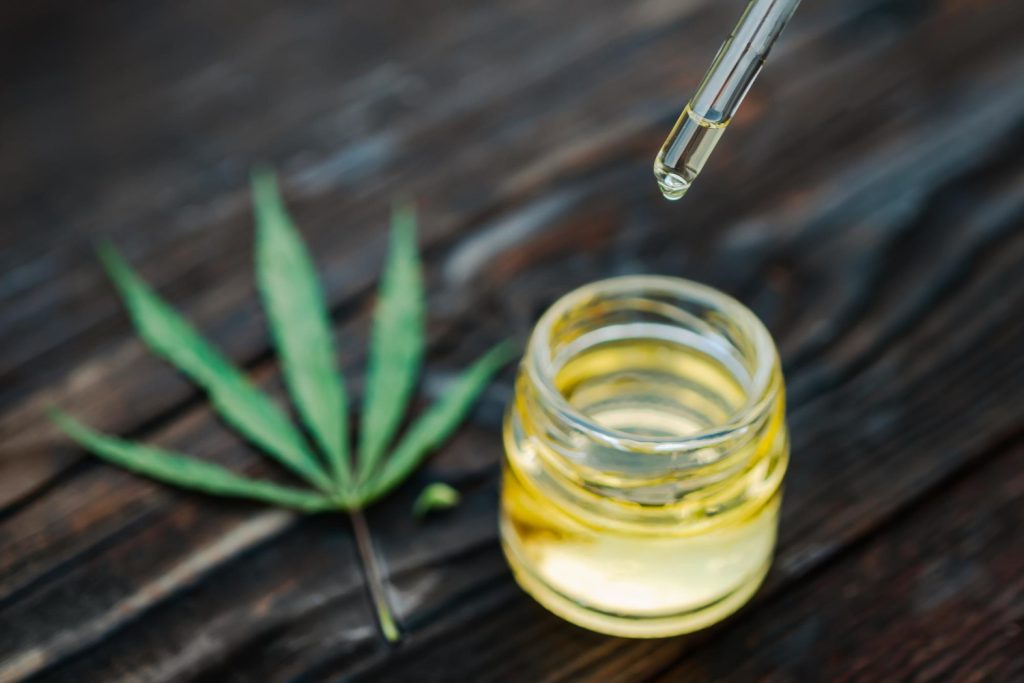
CBG oil as part of a daily routine
Cannabigerol (CBG) is a non-intoxicating cannabinoid found in hemp — and the chemical precursor from which cannabidiol (CBD), tetrahydrocannabinol (THC) and other cannabinoids are synthesised during plant growth. Scientists sometimes call CBG the “mother cannabinoid” because its acidic form, CBGA, is the first cannabinoid the hemp plant produces. As the plant matures, enzymes convert most CBGA into CBDA, THCA and CBCA, leaving less than 1% CBG in the harvested material.
That low natural concentration makes CBG oil more expensive to produce than CBD oil. Extracting a meaningful amount of cannabigerol requires roughly 20 times more hemp plant material — or an early harvest before conversion depletes the CBG content. Despite the higher cost, a growing number of Australians include CBG oil alongside or instead of CBD oil in daily routines. For a detailed look at the cannabinoid itself, the what CBG oil is article covers the science in depth.
This article explains what makes CBG different from CBD, how people typically incorporate CBG oil into morning and evening routines, and what to verify before buying.
What cannabigerol is and why it costs more
Every cannabinoid in the hemp plant starts as CBGA — cannabigerolic acid. During the flowering stage, enzymes in the plant convert CBGA into three main branches: CBDA (which becomes CBD), THCA (which becomes THC) and CBCA (which becomes CBC). By the time a typical hemp crop reaches harvest maturity, the conversion is nearly complete. Less than 1% of the plant’s cannabinoid content remains as CBG.
That low yield creates a production challenge. To extract the same quantity of cannabigerol that a standard CBD extraction would yield from one harvest, manufacturers need approximately 20 times more raw hemp. The alternative is harvesting the crop earlier — around six weeks into an eight-week flowering cycle — when CBG concentrations are higher but total plant biomass is lower. Either approach costs more than standard CBD extraction.
Some hemp breeders now develop CBG-rich cultivars through selective breeding, producing plants that retain higher CBGA concentrations at maturity. These strains are reducing production costs gradually, but CBG oil remains more expensive per milligram than CBD oil in most markets. EU Labs produces CBG oil using the same supercritical CO₂ extraction process used for the CBD range — no solvents, no chemical residue.
How CBG oil compares to CBD oil
CBG and CBD are both non-intoxicating cannabinoids extracted from hemp, but they are different compounds with different molecular structures. The key distinction at the receptor level: CBG interacts directly with CB1 and CB2 receptors in the endocannabinoid system, while CBD influences those receptors indirectly. Both are non-intoxicating — neither produces the “high” associated with THC.
From a product standpoint, the differences are practical. CBG oil costs more per milligram because of the production challenges described above. CBD oil is more widely available across a broader range of concentrations and spectrum types. Most CBG oils on the market are broad spectrum or isolate-based, since producing a full spectrum CBG extract with meaningful levels of other cannabinoids requires additional formulation steps.
Some people use CBG oil on its own. Others combine it with CBD oil at different times of day as part of a split routine. The CBD, CBG and CBN comparison breaks down the differences between all three cannabinoids for those deciding which to try first — or whether to use more than one.
How people use CBG oil in a daily routine
The most common method for taking CBG oil is sublingual — placing drops under the tongue using the bottle’s built-in dropper. Holding the oil under the tongue for 30 to 60 seconds allows absorption through the sublingual membrane before swallowing. Most people report onset within 15 to 20 minutes using this method, with the experience lasting roughly two to three hours.
Timing depends on personal preference. Many CBG oil users take it in the morning, often after breakfast, as part of a wake-up routine. Others split servings between morning and afternoon. The routine itself is straightforward: shake the bottle, draw the dropper, place the oil under the tongue, hold, swallow. Takes under a minute.
Starting low is the standard approach. A common beginning point for CBG oil is 5 to 15 mg per day — which translates to a fraction of a dropper depending on the product’s concentration. The EU Labs CBG Oil 3000mg delivers 60 mg of cannabigerol per millilitre in a 50 mL bottle, so a quarter-dropper provides roughly 15 mg. The EU Labs CBG Oil 12000mg at 240 mg/mL delivers four times the concentration per drop — intended for those who already know their preferred serving size. The concentration levels article explains what mg/mL means in practice.
Consistency matters more than any single serving. People who include CBG oil in a daily routine typically use it at the same time each day, adjusting the amount over weeks rather than days. Consult a healthcare professional before starting any new supplement routine.
CBG and CBN — morning and evening
A pattern that appears frequently among cannabinoid users is pairing CBG oil with cannabinol (CBN) oil at different times of day. CBG is a popular choice for morning routines. CBN oil — cannabinol, a cannabinoid formed when THC degrades through oxidation — is commonly used as part of an evening or bedtime routine.
The pairing isn’t based on proven synergy. It reflects personal preference and how people organise their routines around different cannabinoids. Some users take CBG in the morning and CBN at night. Others use CBD during the day and CBN in the evening. The combinations vary. What stays consistent is the routine structure: a specific cannabinoid at a specific time, sublingual, held under the tongue, taken daily.
EU Labs produces both: the CBG Oil range at 3000mg and 12000mg concentrations, and the EU Labs CBN Oil 3000mg at 60 mg/mL. All use MCT coconut oil as the carrier and CO₂ extraction. For the full comparison between cannabinoids, see CBD, CBG and CBN compared.
What to check before buying CBG oil
The same verification steps that apply to CBD oil apply to CBG oil — with one addition. Because CBG is more expensive to produce, the risk of mislabelled or under-dosed products is higher. A certificate of analysis (COA) from an independent third-party lab is the only way to confirm that a CBG oil actually contains the cannabigerol concentration printed on the label.
Five things to verify. First, the COA should be batch-specific and issued by an ISO/IEC 17025-accredited lab — not the manufacturer’s own facility. Second, the cannabinoid panel should list CBG as the dominant cannabinoid, with the concentration matching the label claim within 10–15%. Third, contaminant panels for heavy metals, pesticides, residual solvents and microbial contamination should all read “Pass.” Fourth, the extraction method should be stated — CO₂ extraction leaves no solvent residue. Fifth, the carrier oil should be named on the label. The third-party lab testing article explains each testing panel in detail.
EU Labs publishes batch-specific COAs for every CBG oil product. Each bottle carries a batch number linking to an independent lab report covering the full cannabinoid panel and all contaminant screenings. Both the 3000mg and 12000mg CBG oils use supercritical CO₂ extraction and MCT coconut oil as the carrier.
For those comparing spectrum types or deciding between cannabinoids, the buying online in Australia guide covers the purchasing process. The full EU Labs range — CBD, CBG and CBN oils — is available in the Stillroot shop.
Frequently asked questions
What is CBG oil?
CBG oil is a hemp extract where cannabigerol (CBG) is the primary cannabinoid. Cannabigerol is the precursor compound from which CBD, THC and other cannabinoids are synthesised during hemp plant growth. CBG oil is non-intoxicating — it does not produce the psychoactive effects associated with THC. EU Labs CBG Oil is CO₂-extracted and suspended in MCT coconut oil.
Is CBG oil more expensive than CBD oil?
Yes. Hemp plants produce less than 1% CBG by weight at harvest maturity, compared to roughly 15–20% CBD. Extracting a usable amount of cannabigerol requires approximately 20 times more plant material than a comparable CBD extraction. The higher raw material cost translates to a higher retail price per milligram of active cannabinoid.
Can I take CBG oil and CBD oil together?
Many people use both cannabinoids as part of a daily routine — often CBG in the morning and CBD at a different time of day. The two are different compounds and are typically sold as separate products. Consult a healthcare professional before combining supplements. For the differences between each cannabinoid, see CBD vs CBG vs CBN.
How do I take CBG oil?
The most common method is sublingual: place the desired amount under the tongue using the dropper, hold for 30 to 60 seconds, then swallow. Most people start with a low serving — around 5 to 15 mg per day — and adjust gradually. EU Labs CBG Oil 3000mg delivers 60 mg of cannabigerol per millilitre, so a quarter-dropper provides approximately 15 mg.
What concentration of CBG oil should I start with?
The EU Labs CBG Oil 3000mg at 60 mg/mL is a common starting point — a small portion of the dropper delivers a moderate serving. The 12000mg concentration at 240 mg/mL suits those who already know their preferred serving size and want more cannabigerol per drop. The concentrations explained article covers the maths behind mg/mL calculations.
These products have not been evaluated by the TGA. They are not intended to diagnose, treat, cure, or prevent any disease. You must be 18+ to purchase. Please consult a healthcare professional before use.