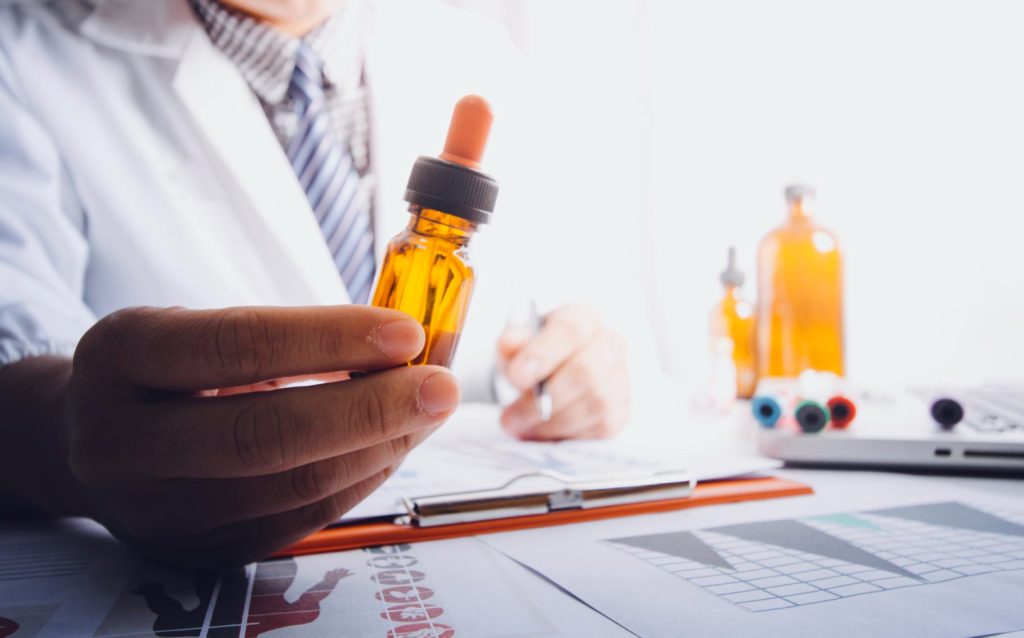
CBD oil and drug tests in Australia — what you need to know
One of the most common questions from people considering cannabidiol (CBD) oil in Australia is whether using it can produce a positive drug test result. The short answer is: it depends on the product. Standard Australian drug tests screen for tetrahydrocannabinol (THC) metabolites, not cannabidiol. But full spectrum CBD oil contains trace amounts of THC, and under some circumstances that THC can accumulate to detectable levels.
This article covers how Australian drug tests work, the difference between full spectrum and broad spectrum CBD oil in the context of drug testing, and what product verification can and cannot guarantee. It does not provide legal advice. Anyone in a workplace or regulatory context where drug testing applies should consult their employer’s policy and a legal professional before using any cannabis-derived product.
What Australian drug tests screen for
Workplace drug testing in Australia typically follows the AS/NZS 4308 standard for urine testing or AS 4760 for oral fluid testing. Both standards screen for cannabis by detecting the THC metabolite delta-9-tetrahydrocannabinol-9-carboxylic acid (THC-COOH) in urine, or THC itself in oral fluid (saliva).
Cannabidiol is not on the standard Australian workplace drug test panel. A test conforming to AS/NZS 4308 or AS 4760 does not screen for CBD and will not return a positive result from CBD alone. The trigger for a positive cannabis result is THC or its metabolites — not CBD, CBG, CBN or other non-psychoactive cannabinoids.
Police roadside drug tests in Australia (oral fluid tests) also screen for THC specifically, not CBD. The same principle applies: CBD alone does not trigger a positive result on these tests.
Why full spectrum CBD oil carries drug test risk
Full spectrum CBD oil retains all the cannabinoids from the hemp plant — including trace THC below 0.3% by weight. That 0.3% figure means that in a 50 mL bottle of full spectrum CBD oil at 60 mg/mL, there is a small but real amount of THC present.
At low daily amounts, trace THC in a full spectrum product is unlikely to accumulate to detectable levels. But at higher daily amounts — particularly the larger serving sizes associated with the higher-concentration products like the EU Labs 12000mg range — THC intake increases. Whether it accumulates to detectable levels in urine or saliva depends on body fat percentage (THC metabolites are fat-soluble and store in fat tissue), frequency of use, individual metabolism and the specific test’s cut-off threshold.
There is no guaranteed “safe” daily amount of full spectrum CBD oil for drug testing purposes. The interaction between trace THC, individual physiology and test sensitivity is too variable to state a definitive limit. Published case reports document positive drug test results from CBD product use, including products that technically complied with THC content limits. The mechanism is THC accumulation over time, not a single large dose.
Broad spectrum CBD oil and drug tests
Broad spectrum CBD oil is processed after extraction to remove THC below detectable limits. A batch-specific certificate of analysis (COA) for a broad spectrum product should show THC at ND (Not Detected) — meaning below the laboratory’s detection threshold, typically 0.005% or lower depending on the testing method.
Broad spectrum CBD oil carries significantly lower drug test risk than full spectrum because THC has been removed rather than merely diluted to a low percentage. However, “lower risk” is not “zero risk.” A few caveats apply:
COA limits. The COA confirms THC is below the lab’s detection threshold at the time of testing. If a lab’s detection limit is 0.01%, a product testing at 0.009% would show ND — but that trace amount, consumed daily over weeks, could theoretically accumulate. This is an extreme edge case, but the technically correct position is that broad spectrum products from verified batches carry very low but not mathematically zero THC exposure.
Mislabelled products. Not every product labelled “broad spectrum” or “zero THC” actually contains no detectable THC. Without a batch-specific COA from an independent third-party lab, there is no verified basis for the claim. The third-party lab testing article covers what the COA should confirm, and the lab report guide explains how to verify THC readings.
The broad spectrum CBD oil article and the full spectrum vs broad spectrum comparison cover the formulation differences in detail.
CBD isolate and drug tests
CBD isolate — pure crystalline cannabidiol with all other plant compounds removed — contains no THC. Products made from CBD isolate (some capsules, certain tinctures marketed specifically as “isolate”) present the lowest theoretical drug test risk among CBD formats. However, isolate products still require a COA to verify that THC is absent and that the product is actually isolate rather than a misrepresented full or broad spectrum extract.
EU Labs does not produce isolate products. The EU Labs range covers full spectrum and broad spectrum oils.
Employer policies and legal context
Australian workplace drug policies and the legal consequences of a positive drug test vary by industry, employer and state. Some industries — mining, transport, construction, healthcare — apply zero-tolerance policies under safety legislation. In these contexts, a positive drug test may result in stand-down, disciplinary action or termination regardless of the source of the THC.
The TGA’s scheduling of CBD under Schedule 3 (pharmacist-only, OTC up to 150 mg/day) or Schedule 4 (prescription) does not exempt a worker from an employer’s drug-free workplace policy. A legally purchased product that results in a positive test is still a policy violation under most zero-tolerance frameworks.
Anyone subject to workplace or regulatory drug testing — including transport workers under the Heavy Vehicle National Law, aviation personnel, and employees under state safety legislation — should take specific legal advice before using any CBD product, including broad spectrum. The CBD legality article covers the broader regulatory context, and the prescription process guide is relevant for those pursuing regulated medical access.
What to do before a drug test
If a drug test is scheduled and CBD oil use is recent, several practical steps reduce risk and provide documentation:
Stop use before the test. THC metabolites clear from urine over days to weeks depending on frequency and amount of use. For infrequent use at low amounts, clearance is typically faster. For daily use at higher amounts, metabolites may persist longer due to storage in fat tissue. There is no reliable general formula — individual clearance times vary.
Keep your COA and product information. If a result is questioned, having the batch-specific COA showing THC levels for the specific product and batch used provides documentation relevant to a dispute process. It does not guarantee the test result will be overturned, but it provides factual evidence about what the product contained.
Consult a legal professional. In any situation where employment consequences or legal penalties may follow a positive result, legal advice specific to the jurisdiction and employer context is the appropriate response — not internet research.
EU Labs broad spectrum and full spectrum options
For people with drug testing concerns who want to use CBD oil, the EU Labs CBD Oil 3000mg Broad Spectrum and 12000mg Broad Spectrum are the appropriate products. Both carry batch-specific COAs confirming THC at ND. The full spectrum and 12000mg full spectrum options contain trace THC and carry higher drug test risk.
The full EU Labs range is available through the Stillroot shop, shipping to Sydney, Melbourne, Brisbane, Perth, Adelaide, Cairns, Mackay and all Australian locations.
Frequently asked questions
Will CBD oil show up on an Australian drug test?
Standard Australian workplace drug tests (AS/NZS 4308 for urine, AS 4760 for oral fluid) screen for THC metabolites, not CBD. CBD alone does not trigger a positive result. Full spectrum CBD oil contains trace THC, which can accumulate to detectable levels with regular use. Broad spectrum CBD oil has THC removed below detectable limits and carries lower but not zero theoretical risk.
Is broad spectrum CBD safe to use before a drug test?
Broad spectrum CBD oil verified by a batch-specific COA showing THC at ND carries the lowest risk among CBD formats. However, “lower risk” is not a guarantee. Anyone subject to workplace or regulatory drug testing should seek specific legal advice before using any CBD product. Do not rely on this article as a guarantee of a negative test result.
Can I tell my employer I use CBD oil if I fail a drug test?
Disclosing CBD oil use after a positive drug test is a legal and employment matter specific to the jurisdiction and employer policy. In zero-tolerance industries, the source of the THC may be relevant to mitigation but not necessarily to the policy outcome. Consult an employment lawyer in your state rather than relying on general internet guidance for this situation.
How long does THC from CBD oil stay in the system?
THC metabolites are fat-soluble and store in fat tissue, leading to variable clearance times. For infrequent low-amount use, urine clearance is typically faster (days to a week). For daily use at higher amounts over an extended period, clearance can take weeks. Individual factors — body fat percentage, metabolism, hydration and test sensitivity — all affect the timeline. There is no reliable general formula for clearance time.
Does the TGA Schedule 3 classification mean CBD oil is safe to use around drug tests?
No. TGA scheduling relates to how a product is regulated for sale and supply — not to its interaction with workplace drug testing. A TGA-approved Schedule 3 CBD product can still produce a positive drug test result if it contains trace THC and is used regularly at sufficient amounts. Schedule status does not exempt a worker from an employer’s drug-free policy.
These products have not been evaluated by the TGA. They are not intended to diagnose, treat, cure, or prevent any disease. You must be 18+ to purchase. Please consult a healthcare professional before use.